
A garage door operates through several interconnected moving parts that guide the door along the track and support its lifting system. When friction develops within these garage door components, the result can be noticeable garage door squeaking during normal operation.
Identifying the specific garage door parts responsible for the noise helps explain how friction forms inside the system. Understanding these mechanical sources also helps determine when a professional garage door repair service may be needed to address worn hardware and restore smoother door movement.
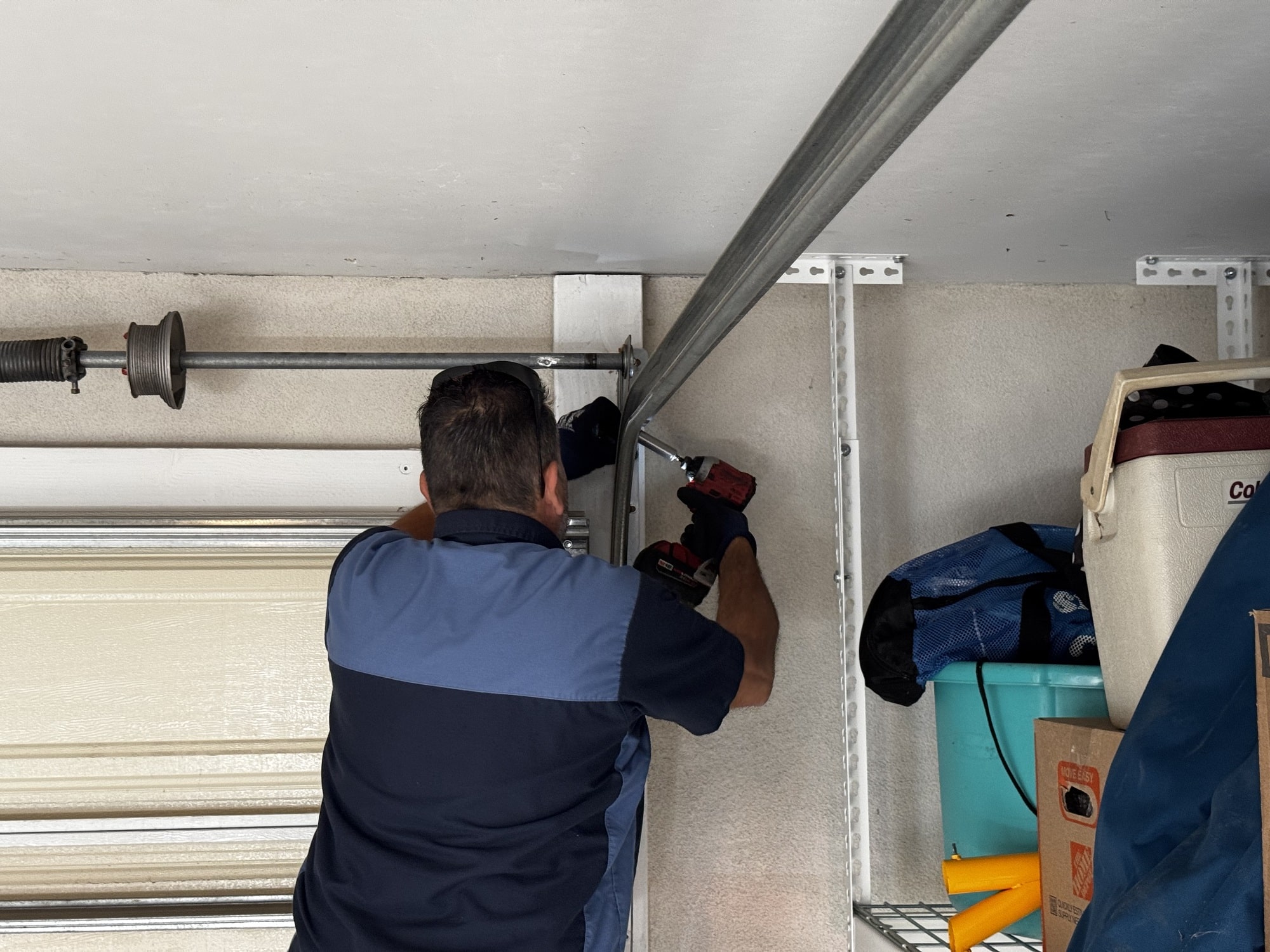
Why Do Garage Doors Start Making Squeaking Sounds Over Time?
Garage door systems use several connected moving parts to guide the door along the track and support lifting under high tension, and as friction develops between these garage door components, noticeable garage door squeaking may begin during operation.
Common conditions that may lead to noise include:
- Friction develops inside the garage door rollers and their roller bearings during repeated cycles
- Gradual wear forming at hinge pivot points between door panels
- Changes in spring tension affect the balance of garage door springs
- Dust buildup is collecting along the track walls and affecting the door’s movement
- Reduced regular lubrication on rotating metal components
To understand how these friction points are addressed, read our guide on How to Stop a Garage Door From Squeaking, which explains how reducing friction in rollers, hinges, and springs helps restore smoother door operation.
Mechanical Parts That Commonly Cause Squeaking Sounds
Rollers and Internal Bearings
Rollers guide the garage door along the track, and internal ball bearings allow the wheels to rotate smoothly during each cycle, so wear or friction in these parts often causes the garage door to squeak.
Noise from roller assemblies often appears when:
- Bearing friction develops inside aging metal rollers after repeated door cycles
- Movement along part of the track becomes rough due to debris or surface wear
- Roller wheels shift slightly against the track walls during opening cycles
- Aging steel rollers create metal-to-metal contact while rotating
- Lack of regular lubrication causes bearings to grind instead of rotating smoothly
Regular lubrication helps limit friction in rollers and hinges during door movement, and Clopay reiterates that maintaining these components allows the garage door system to operate more quietly and smoothly.
Panel Hinges Between Door Sections
Panel hinges connect individual door panels and allow them to bend as the door follows the curved track, so friction at the hinge pivot points frequently contributes to a noisy garage door.
Noise often develops when hinge movement involves:
- Gradual loosening of hardware that creates loose hinges during door travel
- Wear forming at the hinge pivot points after years of repeated cycles
- Friction develops between connected metal parts during movement
- Dust is collecting inside hinge joints and affecting motion
- Reduced proper lubrication along the rotating hinge hardware
Hinge movement allows the door panels to bend smoothly along the track, and persistent friction in these joints may eventually signal the need for garage door maintenance to restore smooth operation.
Torsion Springs and Spring Mounting Hardware
Torsion springs support the heavy lifting required to raise a garage door and operate under high tension, so friction around the springs may create noticeable noise as the system ages.
Spring-related noise may appear under conditions such as:
- Surface friction developing along rotating spring coils
- Changes in spring tension affecting the system balance
- Contact between springs and nearby metal components
- Dust buildup is forming on exposed spring surfaces
- Reduced lubrication, causing resistance during rotation
Friction along high-tension spring coils can create noise during door movement, and Clopay notes that torsion springs work by winding and unwinding to counterbalance the weight of the garage door.
Track Surfaces and Roller Contact Points
Tracks guide the door’s travel path and maintain alignment while rollers move along the system, so friction developing along the track channel may contribute to ongoing garage door squeaking.
Track-related conditions that can increase noise include:
- Dirt accumulation is building along the interior track walls
- Roller edges are rubbing against uneven sections of the track
- Debris settling inside the track channel after extended use
- Misalignment of the pushing rollers against the metal surface
- Lack of cleaning that prevents smooth operation
Although tracks mainly guide the door’s travel path, ongoing friction between rollers and track metal can gradually lead to a squeaky garage door and may require garage door replacement when track wear or structural damage becomes severe.
Bearing Plates and Shaft Supports
Bearing plates support the torsion shaft above the door and allow it to rotate smoothly during operation, so wear inside these garage door components may lead to squeaking sounds near the header area.
Signs of bearing plate wear may involve:
- Internal ball bearings are losing smooth rotation over time
- Friction forming between the shaft hardware and the support brackets
- Aging bearing plates allow the slight movement of the torsion shaft
- Increased vibration during lifting cycles
- Wear develops after years of repeated system operation
Rotational strain within bearing plates can affect how the torsion shaft turns during lifting cycles, and severe wear in this area may eventually require replacement of the garage door springs to restore balanced door movement.
Opener Drive Systems
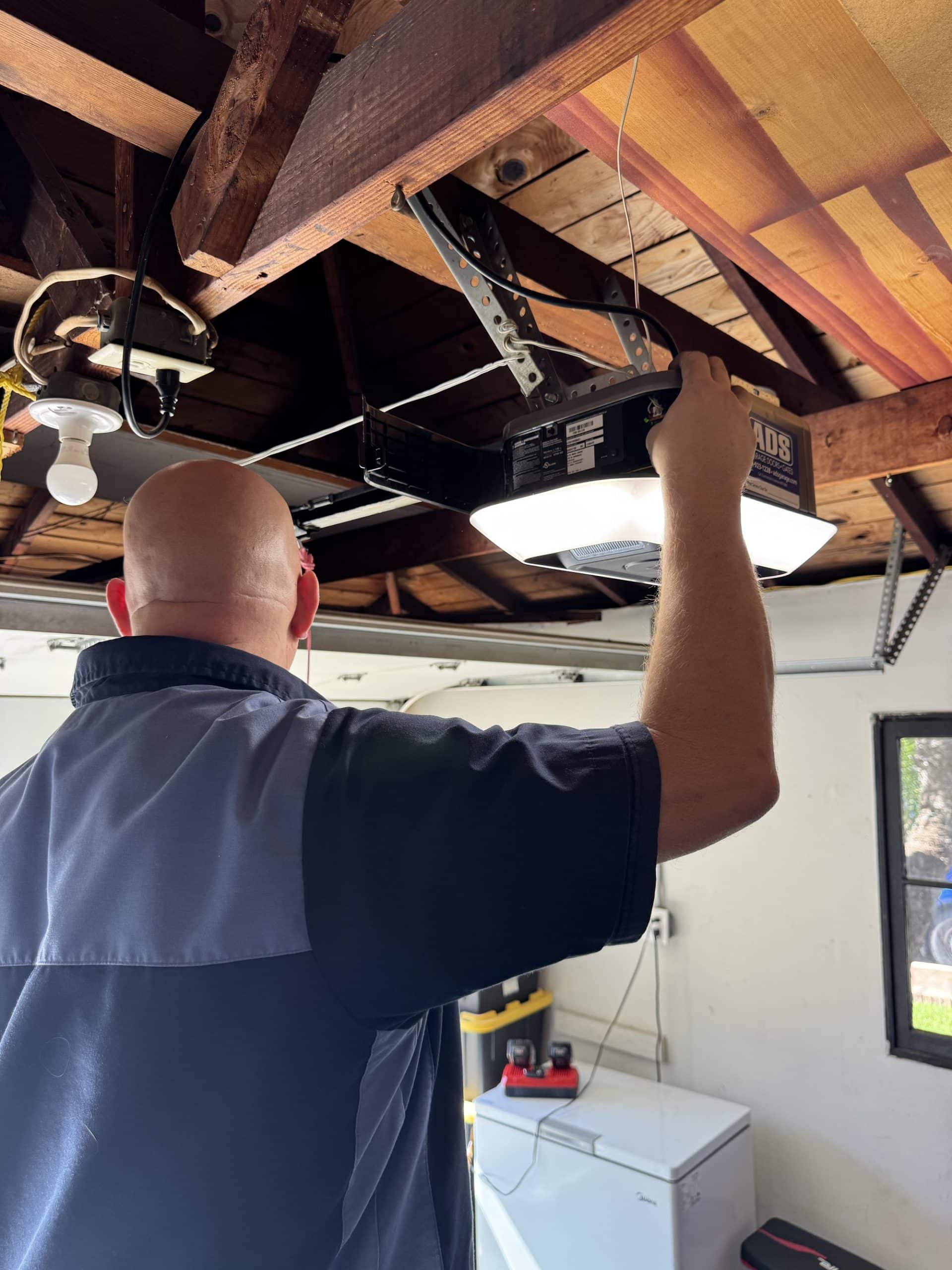
The garage door opener transfers motion from the motor to the door through drive hardware such as chains, belts, or a screw drive, so friction within these mechanisms can sometimes add to overall system noise.
Drive-system noise may occur when:
- Chain or belt assemblies develop vibration during operation
- Wear forms along the opener rail connected to the drive mechanism
- Friction builds within a rotating screw drive shaft
- Motor strain increases as mechanical resistance develops
- Aging opener hardware begins producing vibration sounds
Drive hardware moves the door through a trolley that travels along the opener rail, and the Chamberlain Group explains that chain, belt, and screw drive systems power this motion, which may create vibration or noise if components develop friction.
Environmental Factors That Can Contribute to Garage Door Squeaks
Environmental conditions can increase friction between moving garage door components, allowing garage door squeaking to develop as moisture, debris, and temperature shifts gradually affect system performance.
- High humidity allows moisture to collect on metal parts and lubrication points, increasing friction around rollers, hinges, and springs.
- Dust and dirt buildup along tracks and moving hardware can interfere with smooth door movement during daily cycles.
- Temperature fluctuations cause metal components to expand and contract, which may slightly affect alignment and increase friction.
- Coastal air exposure introduces salt particles that may accelerate wear on exposed garage door components over time.
- Limited cleaning and routine maintenance allow debris to accumulate around tracks and hardware, gradually contributing to vibration and operational noise.
To explore how regional climate conditions contribute to persistent noise in garage door systems, read our guide on Why Is My Garage Door Squeaking in San Diego?, which explains the environmental factors that often influence garage door performance in coastal areas.
How Professionals Identify the Source of a Squeaking Garage Door
Identifying the source of a garage door squeak requires a full inspection of the system because friction can build up in several moving components during normal operation.
- Observing the door’s movement during opening and closing to detect vibration, uneven travel, or unusual noise patterns.
- Inspecting garage door rollers, hinges, and bearing plates for wear that may increase friction during operation.
- Checking garage door springs and spring tension to determine whether the imbalance is placing strain on other components.
- Examine the track walls and alignment to see if rollers are rubbing against the track surface.
- Evaluating the garage door opener and drive hardware for vibration that may contribute to system noise.
Pinpointing the exact friction point helps technicians recommend the most effective solution and prevent minor noise issues from developing into costly repairs.
Understanding Where Lubrication Helps Reduce Friction
Lubrication helps limit friction between moving garage door components, reducing squeaking and supporting smoother operation.
Lubrication Area | Why It Matters |
Rollers and Roller Bearings | Lubrication helps rollers rotate smoothly along the track without grinding against the metal surface. |
Hinges and Pivot Points | Applying lubricant allows hinges to bend more freely as the door sections move along the track. |
Torsion Springs | A light coating helps reduce friction between spring coils during lifting cycles. |
Bearing Plates | Lubrication helps ensure smooth rotation of the torsion shaft above the door opening. |
Opener Drive Hardware | Drive components, such as chains or screw drives, benefit from lubrication that helps reduce vibration during operation. |
To identify which components typically require lubrication to reduce friction and limit garage door squeaking, read our guide on Where to Lubricate a Squeaking Garage Door, which outlines the key areas technicians commonly service during maintenance.
When Garage Door Squeak Repair May Be Recommended
Persistent garage door squeaking can signal developing wear within the system, especially when friction continues affecting multiple moving components during normal operation.
- Ongoing noise after regular lubrication may indicate worn rollers, hinges, or bearing hardware.
- Increased friction around garage door springs or changes in spring tension can affect balance and movement.
- Grinding or vibration near the garage door opener may indicate strain in the drive components.
- Continued noise, along with uneven door movement, can indicate developing alignment issues or hardware wear.
Addressing these early warning signs with professional garage door squeak repair can help prevent further strain on the system and reduce the risk of more costly repairs later.
Identify the Parts Behind Garage Door Squeaking and Restore Smooth Operation
Garage door squeaking often develops when friction builds between essential components such as rollers, hinges, springs, and opener drive hardware. Identifying which garage door parts create the noise helps prevent additional strain on the system and supports smoother, more reliable door movement over time.
ADS Garage Doors & Gates provides professional inspections and targeted garage door repair services for homeowners in San Diego, CA, who are experiencing a noisy garage door. If your garage door continues to squeak or make other unusual sounds, contact us or give us a call today to schedule a professional inspection and restore quieter operation to your garage door system.