
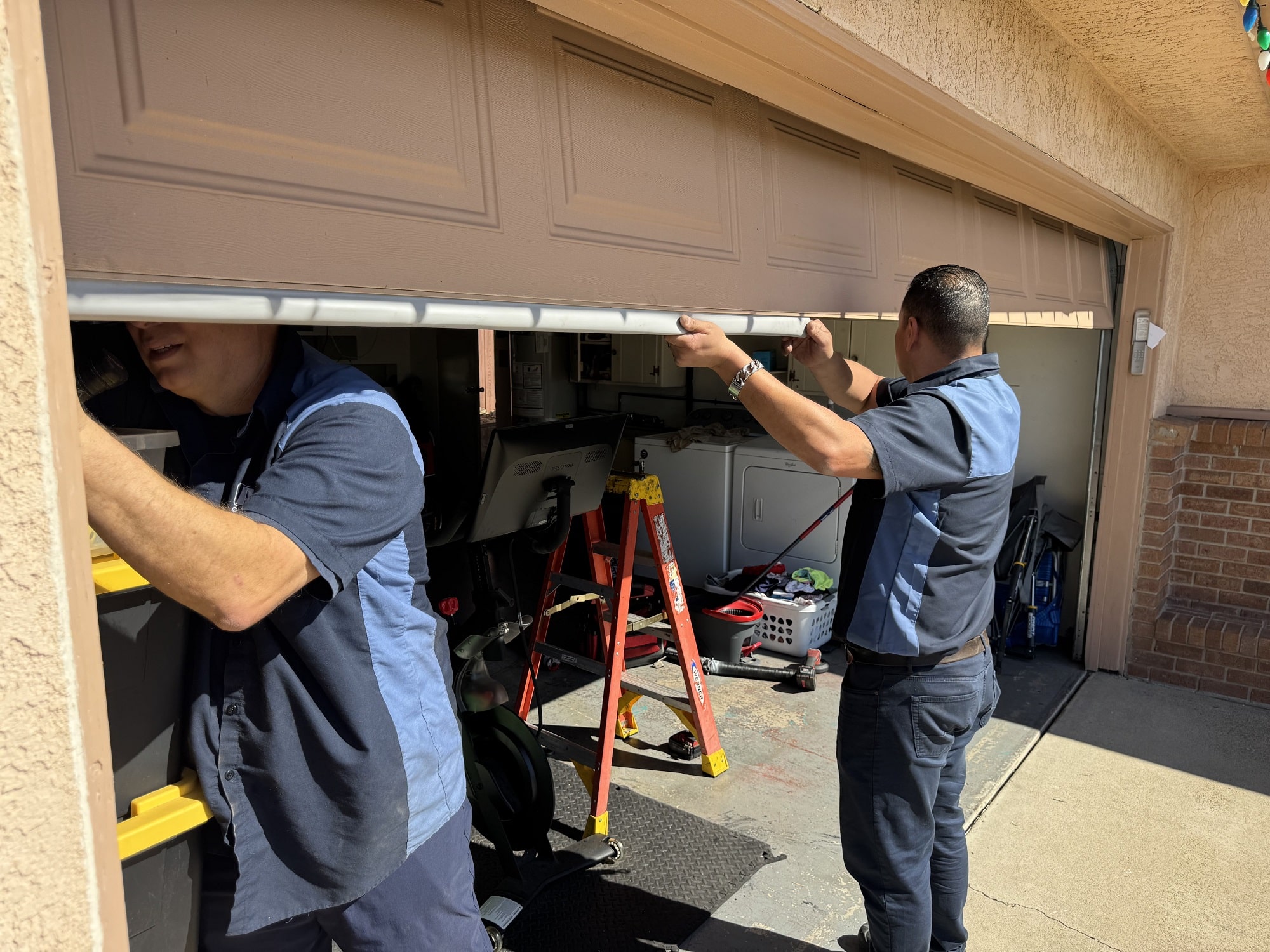
A garage door makes noise when certain mechanical components begin operating without sufficient lubrication. Identifying where lubrication normally applies helps explain how garage door squeaking develops and why certain sections of the door system generate sound.
When friction builds up in hinges, rollers, or springs, the door may begin to squeak during normal cycles. In many situations, homeowners also begin exploring whether a garage door repair is needed when the noise persists or worn hardware is involved.
Why Does a Garage Door Squeak Over Time?
Garage door systems rely on mechanical components that move during every opening and closing cycle, and as lubrication wears down over time, friction develops between metal parts, which is why homeowners often begin noticing garage door squeaking.
Common conditions that contribute to these noise patterns include:
- Frequent door cycles that gradually wear down lubrication around garage door parts and pivot points.
- Environmental exposure, such as high humidity, may affect metal surfaces and increase friction.
- Dust buildup along track walls and surrounding components interferes with smooth movement.
- Aging hardware, including garage door springs and hinges, experiences greater friction over time.
- Loose hinges or worn hardware that allow vibration as the door moves.
To understand how these friction conditions develop within the garage door system, read our guide on How to Stop a Garage Door From Squeaking, which explains the common reasons homeowners hear squeaking during door operation.
Where to Lubricate a Garage Door to Reduce Garage Door Squeaks
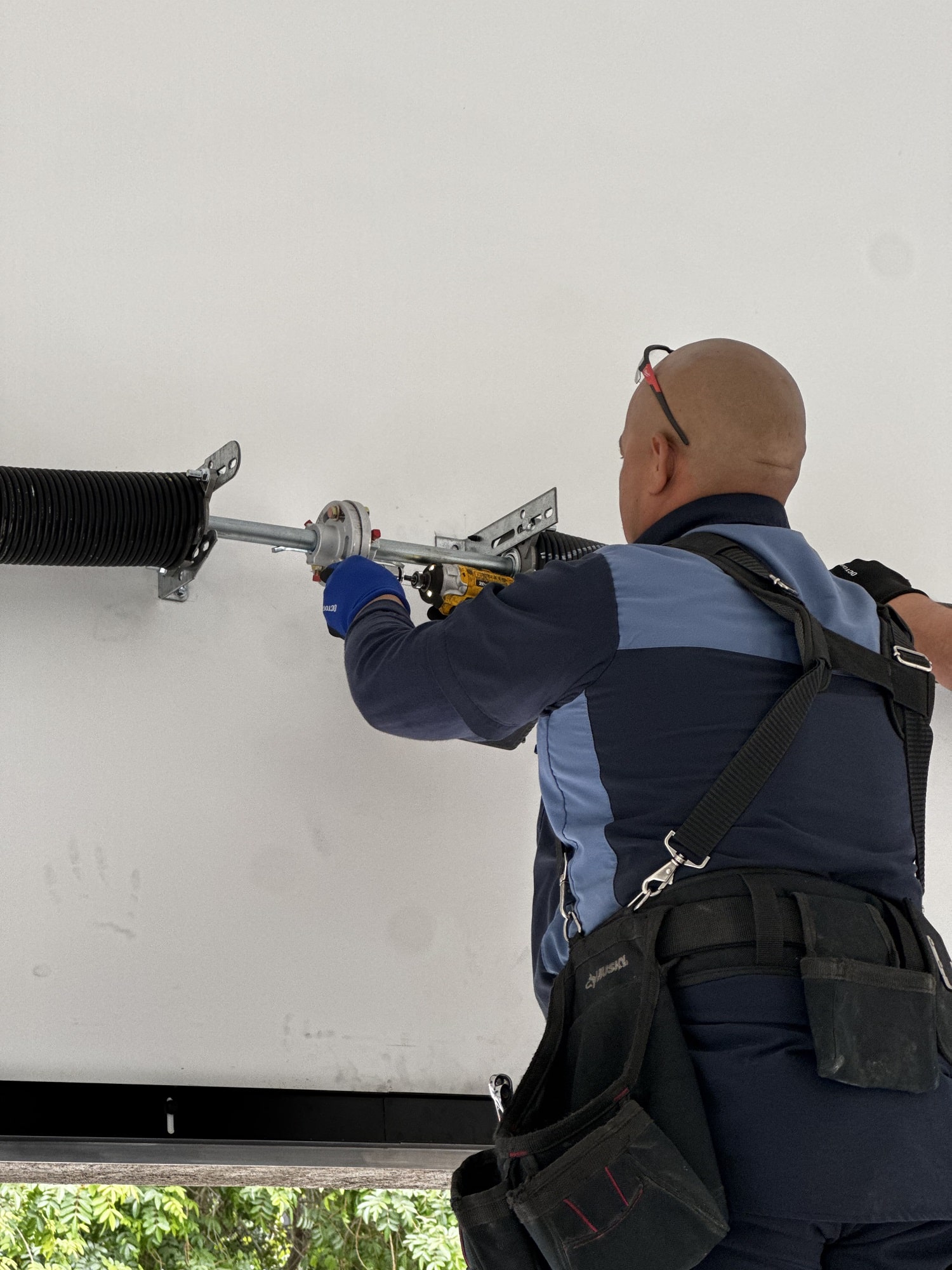
Torsion Spring Coils Above the Garage Door
Garage door springs operate under high tension while supporting the door’s weight, and lubrication along the spring coils helps reduce friction that can contribute to garage door squeaking during opening cycles.
Spring lubrication is typically performed through actions like:
- Position the garage door closed to keep the springs stable during maintenance.
- Wipe away dust or buildup from the spring surface using a damp cloth before applying lubricant.
- Apply a light coating of silicone spray along the full length of the spring coils.
- Allow the lubricant to spread between the coils as the spring expands and contracts.
- Cycle the garage door several times so the lubricant distributes evenly across the metal parts.
Lubrication along torsion spring coils helps reduce friction and noise during door movement, and Clopay notes that applying a thin layer of silicone-based lubricant and cycling the door helps distribute lubrication across the springs.
End Bearing Plates Along the Torsion Shaft
End bearing plates support the torsion shaft, which rotates when the garage door opens, making lubrication of the bearing assembly important for smooth mechanical operation.
Bearing plate lubrication usually follows a process that includes:
- Inspect the bearing plate area to locate the ball bearings supporting the torsion shaft.
- Remove debris or dust that may interfere with the bearing assembly.
- Direct a small amount of spray lubricant toward the ball bearings within the plate.
- Allow the lubricant to reach the point where the torsion shaft passes through the bearing plate.
- Operate the garage door briefly to allow lubrication to spread through the rotating components.
Rotation within these bearing plates supports the torsion system during door movement, and worn bearings or hardware around the shaft may eventually require garage door spring repair to restore smooth lifting performance.
Hinge Pivot Points Between Door Panels
Garage door panels connect through hinge brackets that allow the door to bend as it travels along the track system, and lubrication at hinge pivot points helps reduce friction between metal components.
Maintaining hinge lubrication normally requires steps such as:
- Inspect each hinge along the door panels to identify pivot points that rotate during movement.
- Remove dirt or buildup around hinge brackets before applying lubricant.
- Apply spray lubricant directly onto the hinge pivot joints.
- Allow the lubricant to penetrate the spaces between the metal components in the hinge assembly.
- Move the garage door through a full cycle to spread lubrication along the hinge system.
Movement between connected panels creates repeated metal-to-metal contact, so worn hinge hardware or loose brackets may prompt homeowners to schedule garage door installation as panel alignment and structural integrity decline.
Roller Bearings Inside the Track System
Garage door rollers guide the door along the track system during opening and closing cycles, and proper lubrication of the roller bearings helps reduce friction and support smoother door travel.
Roller lubrication commonly takes place through the following sequence:
- Locate each roller positioned along the hinges and track system.
- Wipe away dust buildup along the roller stem and surrounding areas.
- Apply spray lubricant directly to the roller bearings inside nylon rollers or steel rollers.
- Allow the lubricant to penetrate the axle where the roller connects to the hinge bracket.
- Move the door several times to spread the lubricant across the roller bearings.
Clopay explains that keeping garage door rollers properly lubricated reduces friction in the track system, allowing the door to travel more smoothly and quietly as the rollers move along the tracks.
Pulley Wheels in Extension Spring Systems
Extension springs use pulley wheels to guide lifting cables during garage door operation, and lubrication around these pulleys helps reduce friction that may contribute to garage door squeaking.
Pulley maintenance often includes lubrication tasks like:
- Identify the pulley wheels located near the extension springs.
- Inspect the pulley assembly to locate the rotating bearings.
- Apply a small amount of lubricant to the pulley wheel bearings.
- Allow the lubricant to spread along the groove where the lifting cables travel.
- Operate the garage door several times to distribute lubricant through the pulley system.
Pulley wheels guide lifting cables in extension spring systems, so proper lubrication around the pulley bearings helps reduce friction and support smoother garage door movement.
The Opener Arm Connection Point
The opener arm connects the garage door opener to the door bracket, transferring motor movement into the door system, where friction can contribute to garage door squeaking during operation.
Lubricating the opener arm connection often involves actions such as:
- Locate the connection point where the opener arm attaches to the door bracket.
- Inspect pivot joints and fasteners that move during opener cycles.
- Apply a light coating of lubricant to the pivot joints within the arm assembly.
- Allow lubricant to reach the metal contact surfaces around the mounting bolts.
- Operate the garage door opener to spread lubrication across the moving joints.
Maintaining lubrication at the opener arm joints helps reduce friction and vibration where the opener transfers motion, though ongoing strain in this area may sometimes require garage door spring replacement to restore smooth operation.
How Different Friction Points Contribute to Garage Door Squeaking When Opening
Garage door squeaking when opening often develops as friction builds across several moving mechanical components during each lifting cycle.
Friction Point | How It Contributes to Noise |
Spring Tension | Torsion springs rotate and store energy during lifting cycles, and friction between the coils or along the shaft can create squeaking sounds as lubrication wears down. |
Hinge Movement | Hinges allow the door panels to flex as the door follows the track, and repeated metal-to-metal contact at the pivot points can produce noise during door travel. |
Roller Travel | Garage door rollers move along the track system while supporting the door’s weight, and friction at the roller bearings or against the track walls can cause noticeable squeaking. |
Opener Arm Movement | The opener arm transfers motion from the garage door opener to the door bracket, and vibration at the pivot joints may contribute to noise during operation. |
To explore which garage door components most often create these friction points, read our guide on What Parts Cause a Garage Door to Squeak?, which explains the hardware areas that commonly generate squeaking sounds during door operation.
When Garage Door Squeak Repair May Be Needed Beyond Lubrication
Noise may continue after lubrication if garage door components are worn, misaligned, or under excessive strain.
Situations that may require garage door squeak repair include:
- Worn garage door rollers or bearings that no longer rotate smoothly and continue producing friction along the track system.
- Loose hinges or damaged hardware that create vibration as the door panels move through opening cycles.
- Changes in spring tension that affect how the door balances and moves during operation.
- Misaligned track sections cause rollers to rub unevenly against the track walls.
- Aging garage door components that develop repeated friction despite regular lubrication.
Persistent noise after lubrication often signals underlying wear in the garage door system and may require a professional inspection to identify the source of the squeak.
Why Regular Service Helps Prevent Future Garage Door Noise
Routine service helps limit friction and wear across key garage door components that move during daily door cycles.
Regular service often focuses on actions such as:
- Lubricating moving parts like garage door rollers, hinges, springs, and pivot points to reduce friction and support smoother door movement.
- Inspecting garage door hardware, including brackets, fasteners, and hinges that may loosen over time and create vibration.
- Cleaning track areas so rollers travel smoothly along the track walls without obstruction.
- Checking spring tension and roller condition to maintain balanced lifting performance during operation.
- Scheduling periodic professional service to identify worn components before they lead to larger mechanical issues.
To learn how local environmental conditions can influence garage door squeaking, explore our article on Why Is My Garage Door Squeaking in San Diego?, which explains the factors that commonly contribute to garage door noise in coastal areas.
Keeping Garage Door Lubrication Areas Maintained for Quieter Operation
Garage door systems rely on multiple moving parts working together during each opening and closing cycle. When lubrication wears off rollers, hinges, springs, and other metal components, friction can increase, leading to noticeable garage door squeaking during normal operation.
ADS Garage Doors & Gates provides professional garage door inspection and service for homeowners throughout San Diego, CA. If the garage door squeaks or you notice signs of worn hardware, contact us or give us a call today to schedule a garage door service appointment for your home.