
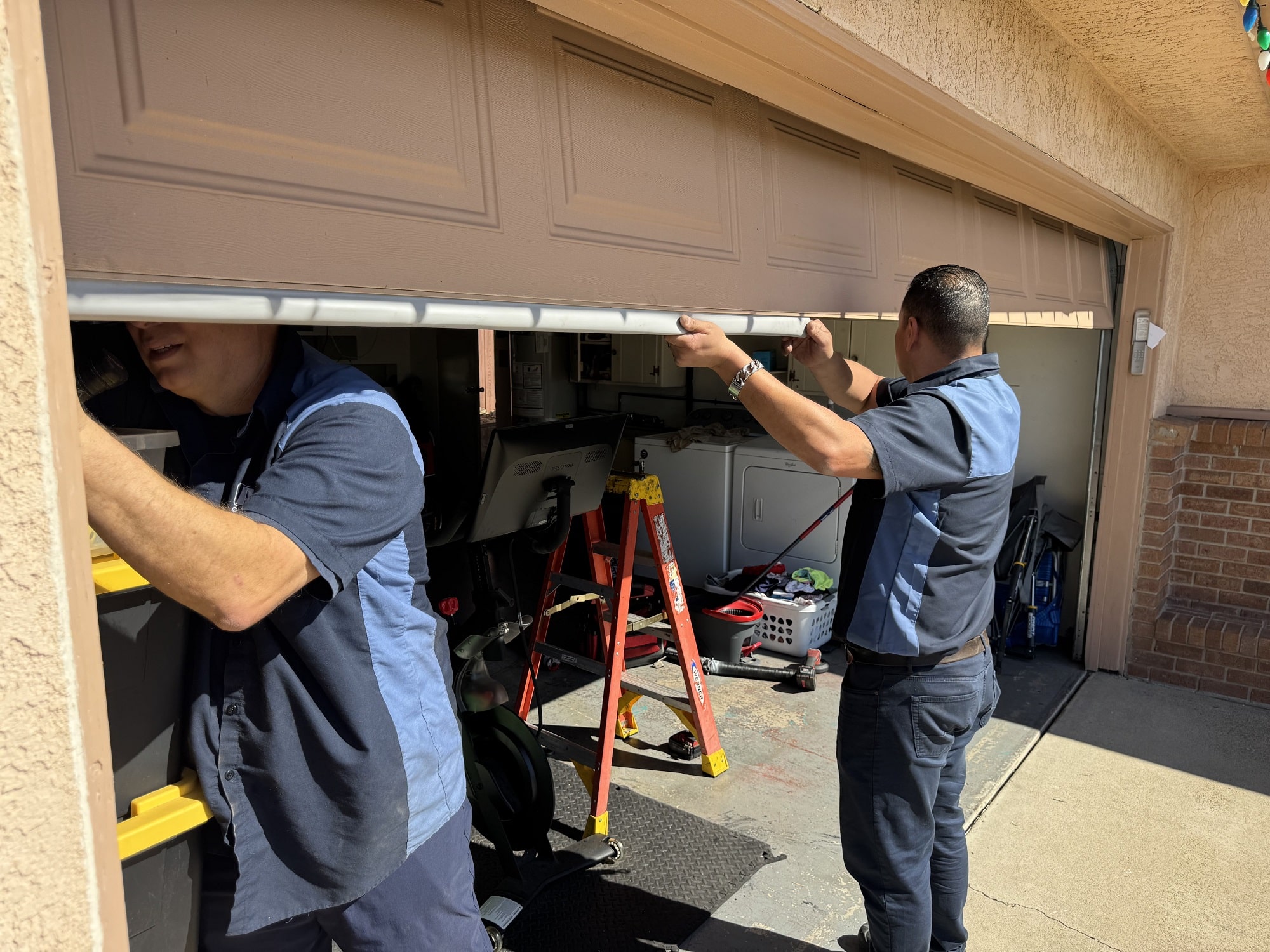
A persistent squeak often occurs when a garage door opens or closes, as friction develops between its moving parts. These noises usually appear as rollers, hinges, or other garage door components begin experiencing wear, reduced lubrication, or environmental exposure.
In San Diego homes, identifying the cause of the noise early helps prevent additional strain on important garage door parts. Professional garage door repair can locate the source of the squeak and restore smoother operation before the issue develops into larger mechanical concerns.
Is Garage Door Squeaking a Sign of a Larger Problem?
A persistent squeak can indicate that friction or wear is developing within several garage door components, which may gradually affect how the garage door moves during normal opening and closing cycles.
Situations where the sound may point to developing concerns include:
- Friction forming between the garage door rollers and the track walls, affecting the door’s movement
- Wear building around hinge pivot points that allow door panels to bend during operation
- Changes in spring tension that shift the balance of the door system
- Hardware, such as brackets or loose hinges, is moving slightly during repeated cycles
- Friction between connected metal parts that support the door’s lifting motion
- Early stress developing within garage door springs or other high-tension hardware
To understand how these friction points are addressed during service, read our guide on How to Stop a Garage Door From Squeaking, which explains how technicians reduce noise and restore smoother operation.
Why Do Garage Doors Start Making Noise Over Time?
Roller Wear and Metal Friction
Constant travel along the track gradually increases friction between the garage door rollers, bearings, and surrounding metal hardware, leading to squeaking during regular operation.
Watch for conditions such as:
- Worn roller bearings are creating resistance along the track path
- Aging metal rollers are producing friction against the track walls
- Dust buildup is collecting around the ball bearings
- Roller wheels are losing lubrication after years of movement
- Deteriorating nylon rollers are causing uneven travel
According to DASMA, friction within garage door hardware can develop over time as components wear, which is why lubrication or professional service may be recommended when squeaking persists.
Hinge Movement Between Door Panels
Repeated opening and closing cycles cause hinge joints and pivot points to experience constant motion, which may eventually produce squeaks between connected garage door components.
Noise from hinge movement often develops when:
- Loose hinges shift between sectional panels
- Pivot joints begin creating friction during panel bending
- Fasteners loosen after repeated door cycles
- Metal hinge plates rub against adjacent metal parts
- Panel alignment places uneven strain on hinge brackets
Ongoing hinge wear can eventually affect panel alignment and door balance, which is why technicians may evaluate the entire system when inspecting hardware movement during garage door installation.
Dry Bearings and Lack of Lubrication
Bearings located inside rollers, hinges, and other moving parts require lubrication to maintain smooth operation, and friction increases when protective grease gradually wears away.
Signs that lubrication loss may be contributing to noise include:
- Dry roller bearings are producing a grinding sound
- Aging grease no longer protects metal contact surfaces
- Lack of regular lubrication during garage door maintenance
- Dust mixing with old lubricant around hardware
- Friction is building along rotating metal components
Service professionals often apply white lithium grease or a silicone spray because the right lubricant reduces friction across moving hardware and improves long-term performance of garage door systems.
Loose Hardware and Mounting Brackets
Constant vibration during opening and closing cycles may slowly loosen bolts and mounting brackets, allowing certain garage door parts to shift slightly during operation.
Situations that commonly produce noise include:
- Rail brackets are loosening near the opener assembly
- Track mounting bolts are backing out over time
- Hinges requiring tightening with a socket wrench
- Panel fasteners are shifting under repeated movement
- Hardware vibration is affecting the door’s balance
Ongoing vibration or bracket shifting may signal broader system wear, and technicians sometimes assess overall hardware condition when recommending garage door replacement for aging systems.
Track Surface Friction Along the Door Path
Metal tracks guide rollers during every opening cycle, and friction inside the channel can create a noisy garage door when surfaces become rough or obstructed.
Situations that may contribute to track-related noise include:
- Dirt buildup is collecting along the inner track walls
- Rollers scraping against uneven metal surfaces
- Debris trapped within sections of the track
- Roller wheels are drifting slightly out of alignment
- Friction forming, where the garage door rollers contact the track
Clopay notes that debris buildup or track misalignment can disrupt roller travel and increase friction along the track path, often contributing to a noisy garage door during operation.
Environmental Conditions Affecting Metal Components
Environmental exposure gradually influences how metal components inside a garage door system perform, particularly in coastal regions like San Diego.
Factors that often contribute to squeaking include:
- High humidity is affecting exposed hardware surfaces
- Salt air is accelerating corrosion on garage door components
- Temperature shifts influencing metal expansion
- Moisture buildup around hinges and springs
- Dust particles settling on moving hardware
Environmental wear can slowly affect multiple mechanical parts of the system and contribute to long-term garage door squeaking.
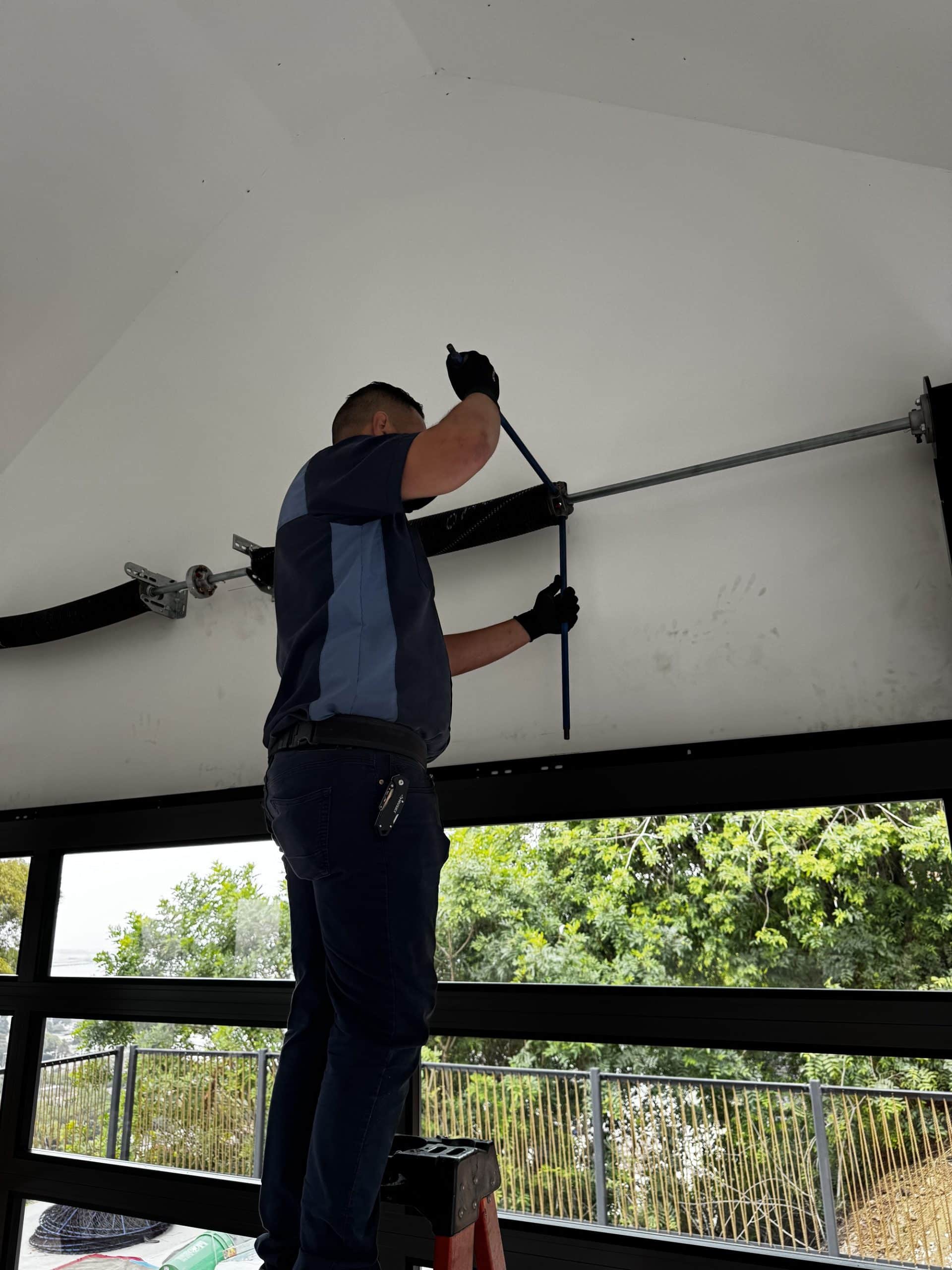
Spring System Tension Changes
Springs support the heavy lifting required to raise a garage door, and small changes in tension can sometimes introduce vibration or noise into the system.
Indicators that spring movement may be influencing sound include:
- Garage door springs are losing lubrication along the coils
- Changes in spring tension affect balance
- Friction is developing near the torsion shaft bearing plates
- Movement within high-stress spring anchor points
- Aging extension springs produce vibration during operation
Because torsion and extension springs counterbalance the door’s weight during opening and closing, Clopay indicates that changes in spring tension can affect how smoothly the door moves and may introduce vibration or noise into the system.
Common Signs of Garage Door Squeaking When Opening
Noise during operation often develops gradually as friction increases between garage door components, making it easier to recognize early warning signs before the system develops more serious mechanical issues.
Common indicators include:
- High-pitched squeaks during the door’s movement as the garage door rollers travel along the track
- Repeated noise coming from hinges or pivot points when panels bend during opening
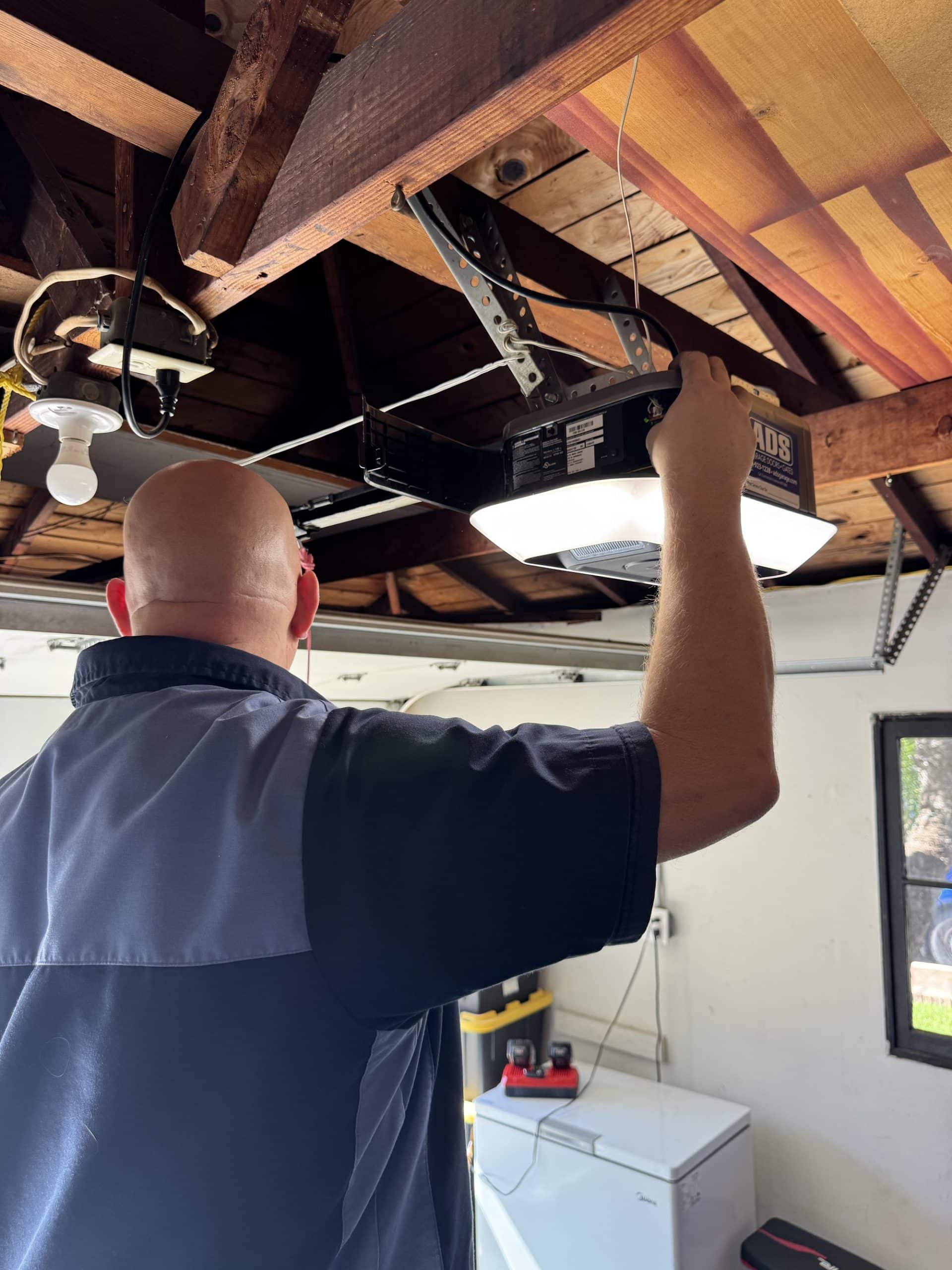
- Sounds near the upper section, where the springs and the garage door opener connect
- Squeaking that becomes louder over time as metal components experience wear
- Intermittent friction sounds that appear when the door first begins opening
Recognizing these patterns early helps identify garage door squeaking before continued friction affects hardware performance or leads to more significant wear within the system.
What Parts of a Garage Door System Commonly Produce Squeaks?
Multiple garage door components move together during each cycle, and friction within certain parts can cause squeaking when wear or loss of lubrication occurs.
Garage Door Part | How It Contributes to Squeaking |
Garage Door Rollers | Worn roller bearings or aging wheels can create friction along the track path during operation. |
Hinges and Pivot Points | Movement between panel joints may produce noise when lubrication fades or loose hinges develop. |
Garage Door Springs | Changes in spring tension or dry coils may introduce vibration into the lifting system. |
Track Surfaces | Dirt buildup along track walls can interfere with roller travel and create friction. |
Opener Rail Components | Movement within the garage door opener rail or drive system may produce mechanical noise during operation. |
To identify which components most often create noise in a residential door system, read our guide on What Parts Cause a Garage Door to Squeak?, which outlines the hardware that technicians inspect during noise-related service calls.
Environmental Factors That Contribute to Garage Door Squeaks in San Diego
Local climate conditions in San Diego can gradually affect garage door components, leading to friction and squeaking as metal parts react to environmental exposure.
Environmental factors that often contribute to noise include:
- High humidity is affecting exposed metal components and increasing surface friction
- Coastal salt air is accelerating corrosion on rollers, hinges, and other garage door parts
- Temperature shifts are causing slight expansion in metal parts along the track system
- Dust and debris are collecting along the track walls and interfering with roller travel
- Moisture buildup around springs and hinges reduces lubrication effectiveness
Environmental exposure can gradually influence the performance of garage door components, which is why ongoing garage door maintenance helps reduce friction and prevent persistent squeaking.
Where Lubrication Is Typically Applied in a Noisy Garage Door System
Noise often develops when friction increases between moving garage door components, and lubrication is commonly applied to specific hardware areas to restore smoother operation.
Typical lubrication points include:
- Garage door rollers and roller bearings, where friction develops as wheels travel along the track
- Hinge pivot points, which bend each time the door panels move during opening and closing
- Garage door springs, where a light coating helps reduce friction along spring coils
- Opener rail contact areas, where moving carriage parts interact with the rail system
- Bearing plates and rotating shafts, which support the door’s lifting system and movement
To learn which friction points technicians address when servicing a squeaking garage door, read our guide on Where to Lubricate a Squeaking Garage Door, which outlines the areas commonly treated during maintenance.
Why Professional Garage Door Squeak Repair May Be Necessary
Persistent garage door squeaking can signal wear within several garage door components, making professional service helpful for locating friction points and restoring smoother door movement.
Situations where professional garage door squeak repair may be recommended include:
- Technicians performing a professional inspection to identify worn rollers, hinges, or springs
- Adjustments to hardware and spring tension that influence the door’s balance
- Replacement of worn garage door rollers, bearings, or other moving hardware
- Lubrication of key pivot points and rotating parts to improve smooth operation
- Detecting early signs of wear that could otherwise lead to costly repairs
Professional evaluation helps isolate the source of noise issues within the system and prevents continued friction from affecting long-term garage door performance.
Why Early Attention to Garage Door Noise Matters
Addressing a squeak early helps prevent friction from spreading across multiple garage door components and affecting the door’s overall performance.
Situations where early attention becomes beneficial include:
- Reducing wear on garage door rollers, hinges, and other moving parts
- Preventing strain on the garage door springs and the lifting system
- Limiting the friction between metal components that guide the door’s movement
- Supporting smooth operation and consistent door balance
- Helping avoid larger mechanical issues that may require expensive repairs
Prompt attention to unusual sounds can improve garage door maintenance outcomes and support long-term system performance, leading to fewer repairs over time.
Fix the Cause of Garage Door Squeaking in San Diego
Garage door squeaking often develops when friction builds between rollers, hinges, springs, and other moving parts that guide the door during daily operation. Coastal conditions in San Diego, normal hardware wear, and reduced lubrication can gradually increase noise and affect how smoothly a garage door operates.
ADS Garage Doors & Gates provides professional service for homeowners experiencing garage door squeaking or other noise issues in San Diego, CA. If your garage door has started producing persistent sounds or showing signs of hardware wear, we can inspect the system and restore smoother operation.
Contact us or give us a call today to schedule service with our San Diego garage door specialists.