
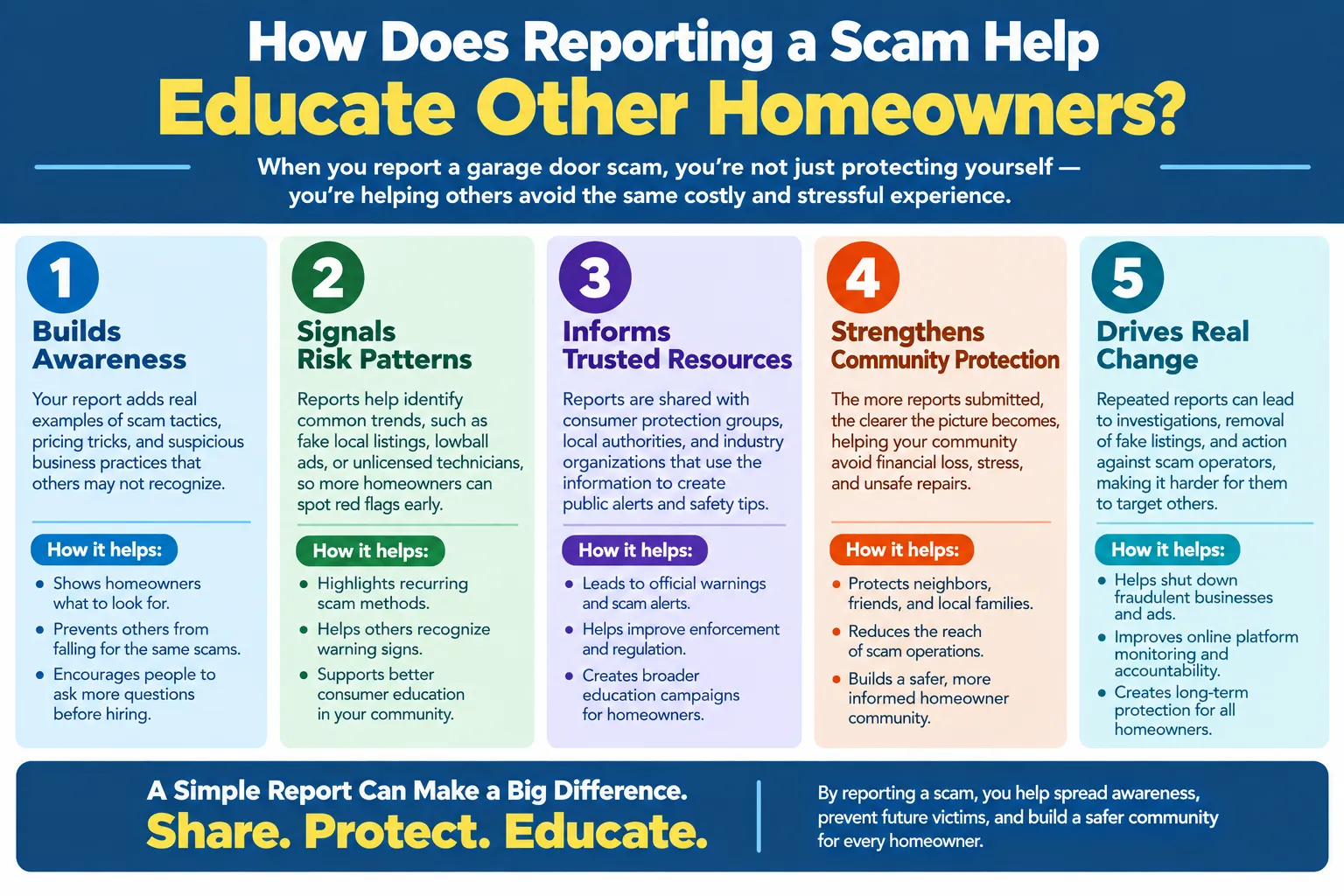
Reporting a garage door scam helps other homeowners by feeding data into consumer alerts, verification databases, and law enforcement patterns that would otherwise stay invisible. A single report rarely stops there, since it often becomes part of the exact warning system a future homeowner relies on before scheduling service.
Filing a report after a bad garage door service experience takes only a few minutes, but the impact can reach well beyond just one household. This guide breaks down what happens once a report is filed and why that process matters far more than most homeowners realize.
Key Takeaways
- Individual reports help agencies identify new scam tactics before they spread to other neighborhoods.
- Aggregated complaint data powers the consumer alerts and warnings homeowners see before scheduling service.
- Public directories and review platforms update based on formal complaints filed against specific companies.
- Word-of-mouth warnings often start with one homeowner willing to report a bad experience.
- Law enforcement relies on multiple reports to build a case against operations working across several regions.
How Reporting Educates and Protects Communities
Filing a report contributes to a larger system that identifies patterns, warns other homeowners, and eventually holds dishonest operators accountable.
What Reporting Does | How It Works | Who Benefits |
Identifies trends | Agencies compare reports to spot new tactics | Future victims of the same scheme |
Triggers alerts | Aggregated data prompts public warnings | Homeowners researching a company |
Updates databases | Directories flag companies tied to complaints | Anyone checking a business beforehand |
Spreads word of mouth | Neighbors share reporting details locally | Nearby homeowners facing the same scam |
Builds legal cases | Multiple reports establish a documented pattern | Communities affected across regions |
One homeowner willing to speak up early adds real, lasting weight to a system that depends entirely on that kind of participation.
Identifying Emerging Scam Trends
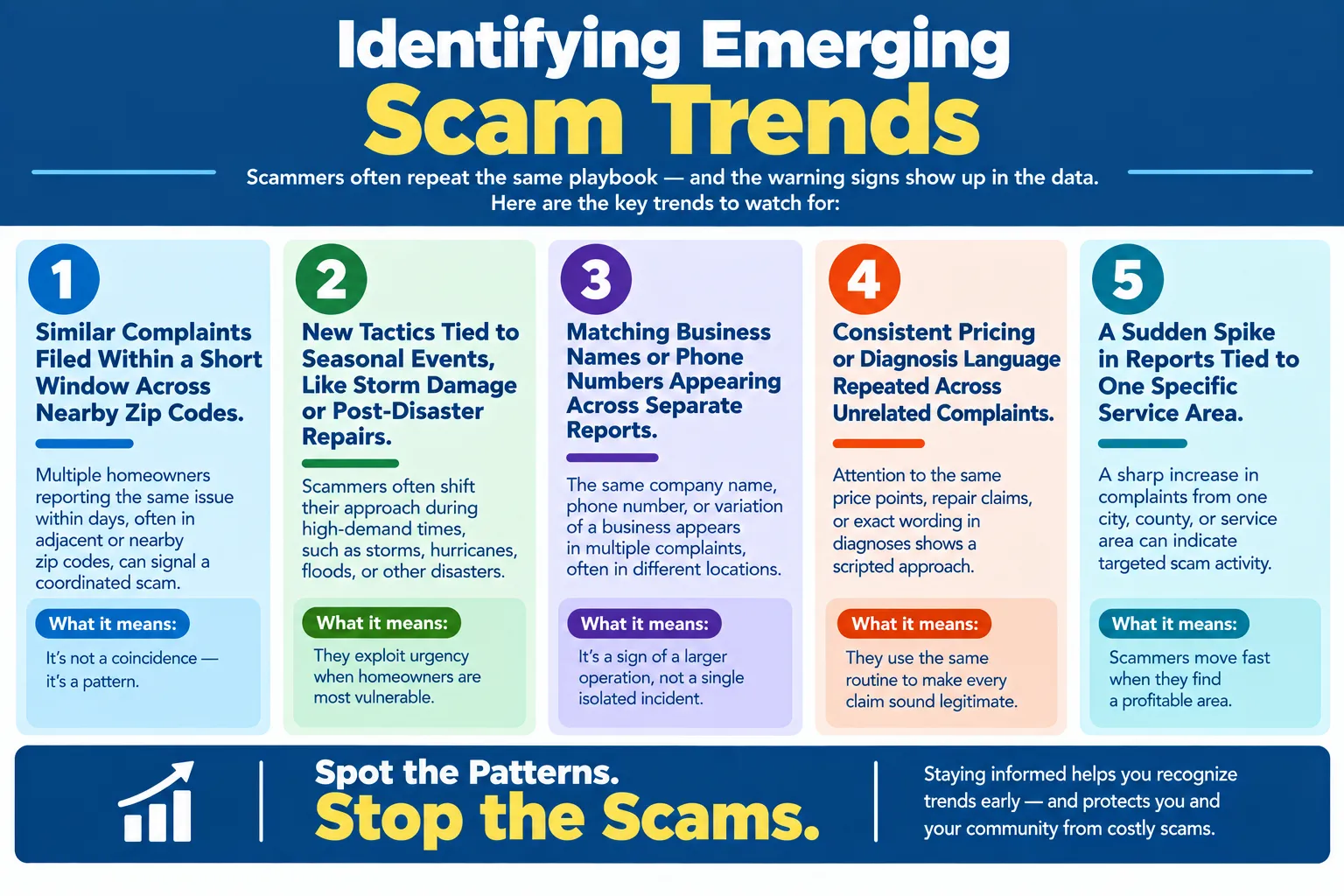
Government agencies and cybercrime units rely on individual reports to spot new garage door replacement and repair scam tactics before they spread.
These details help investigators identify a developing pattern:
- Similar complaints filed within a short window across nearby zip codes.
- New tactics tied to seasonal events, like storm damage or post-disaster repairs.
- Matching business names or phone numbers appearing across separate reports.
- Consistent pricing or diagnosis language repeated across unrelated complaints.
- A sudden spike in reports tied to one specific service area.
To understand why staying alert to new tactics matters this much in the first place, read our guide on Why Education Is the Best Defense Against Garage Door Scam?, which explains how awareness interrupts a scheme before it spreads further.
Triggering Public Consumer Alerts
Aggregated complaint data allows agencies to issue timely warnings well before a scheme reaches its next round of victims.
Public alerts typically draw from these kinds of reported details:
- Business names repeated across multiple unrelated complaints.
- Specific tactics, like bait pricing or fake rebuild claims, described consistently.
- Geographic clusters showing where a scheme is currently most active.
- Warning language matched against known scam scripts.
- Contact information tied to previously flagged companies.
To trace how public alerts like these connect directly back to specific reported tactics, read our guide on What Are the Most Common Garage Door Scam Tactics?, which breaks down the exact patterns agencies watch for.
Powering Database Verification Tools
Public and private registries update their listings whenever formal complaints identify a specific company or unlicensed operator.
These updates depend directly on reports filed by homeowners:
- Contractor license lookups flagged after documented complaints.
- Review platforms marking a business as reported or under investigation.
- Blacklists maintained by consumer protection groups and trade associations.
- Directory listings removed once fraudulent activity gets confirmed.
- Cross-referenced records linking a company to multiple past complaints.
Checking a company against these updated records before scheduling service only works because someone reported the problem first.
Enabling Word-of-Mouth and Peer Warnings
Neighbors sharing details from a bad experience often does more to protect a block or neighborhood than any single formal report.
These informal warnings tend to spread through a few common channels:
- Posts on neighborhood apps naming a specific company or tactic.
- Direct conversations between neighbors after a repair goes wrong.
- Reviews left on local business pages describing the exact experience.
- Warnings shared in community groups focused on home repair.
- Word passed along before a scammer reaches the next house nearby.
A single conversation between neighbors can keep a scammer from targeting a garage door repair business on the same street.
Aiding Law Enforcement Case Building
Investigators rely on multiple reports to connect operations across cities and states, using a documented scam pattern to confirm the link.
Each report contributes a piece of evidence toward building a larger case:
- Matching complaint details across jurisdictions previously treated as unrelated.
- Documented dates, names, and dollar amounts tied to a specific incident.
- Patterns proving repeated behavior rather than a single isolated dispute.
- Evidence supporting license revocation or formal legal action.
- A paper trail investigators can present to support consumer protection claims.
To learn how uninformed homeowners become repeat targets over time, read our guide on How Do Garage Door Scammers Target Uninformed Homeowners, which explains exactly how these patterns form and spread.
What to Include When Filing a Scam Report
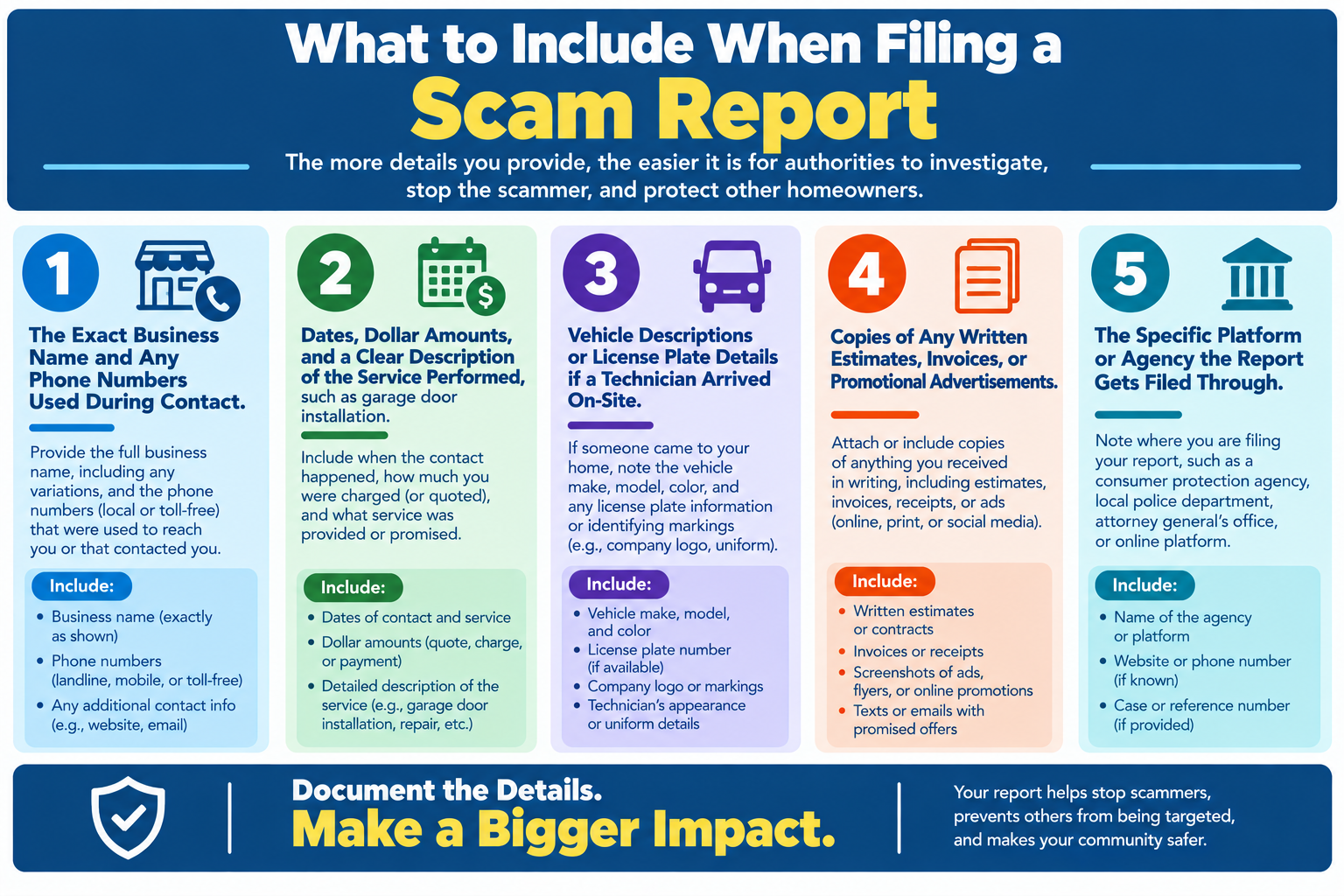
To file a report that genuinely helps other homeowners in the future, include specific details investigators and agencies can act on directly rather than a vague summary.
A strong report typically includes each of these details:
- The exact business name and any phone numbers used during contact.
- Dates, dollar amounts, and a clear description of the service performed, such as garage door installation.
- Vehicle descriptions or license plate details if a technician arrived on-site.
- Copies of any written estimates, invoices, or promotional advertisements.
- The specific platform or agency the report gets filed through.
A report filed with this level of detail carries far more weight and credibility than a general complaint describing only frustration.
A Single Report Rarely Stays Isolated for Long
A report filed after one bad experience often becomes part of a pattern investigators, agencies, and neighbors rely on to stop the same scheme elsewhere. Community protection depends less on any one report and more on homeowners willing to file them consistently.
ADS Garage Doors & Gates encourages every homeowner across San Diego to report suspicious activity, even when the interaction never reaches a signed contract. Contact us or give us a call today to schedule service with a team that would rather earn trust than take advantage of it.