
Garage door springs go through thousands of cycles of tension and release, and that constant stress is exactly what makes them vulnerable to breaking. Several specific factors speed up that process and cause springs to fail well before their expected lifespan.
Identifying the causes of garage door spring breakage is key to catching problems early and avoiding a full system shutdown. This guide walks through every major cause, so homeowners know what to watch for and when to call for garage door spring repair.
What Does a Broken Garage Spring Look Like?
A broken garage door spring leaves behind physical signs that point directly to what went wrong inside the coil, and recognizing those signs early can save homeowners from a much more expensive repair down the line.
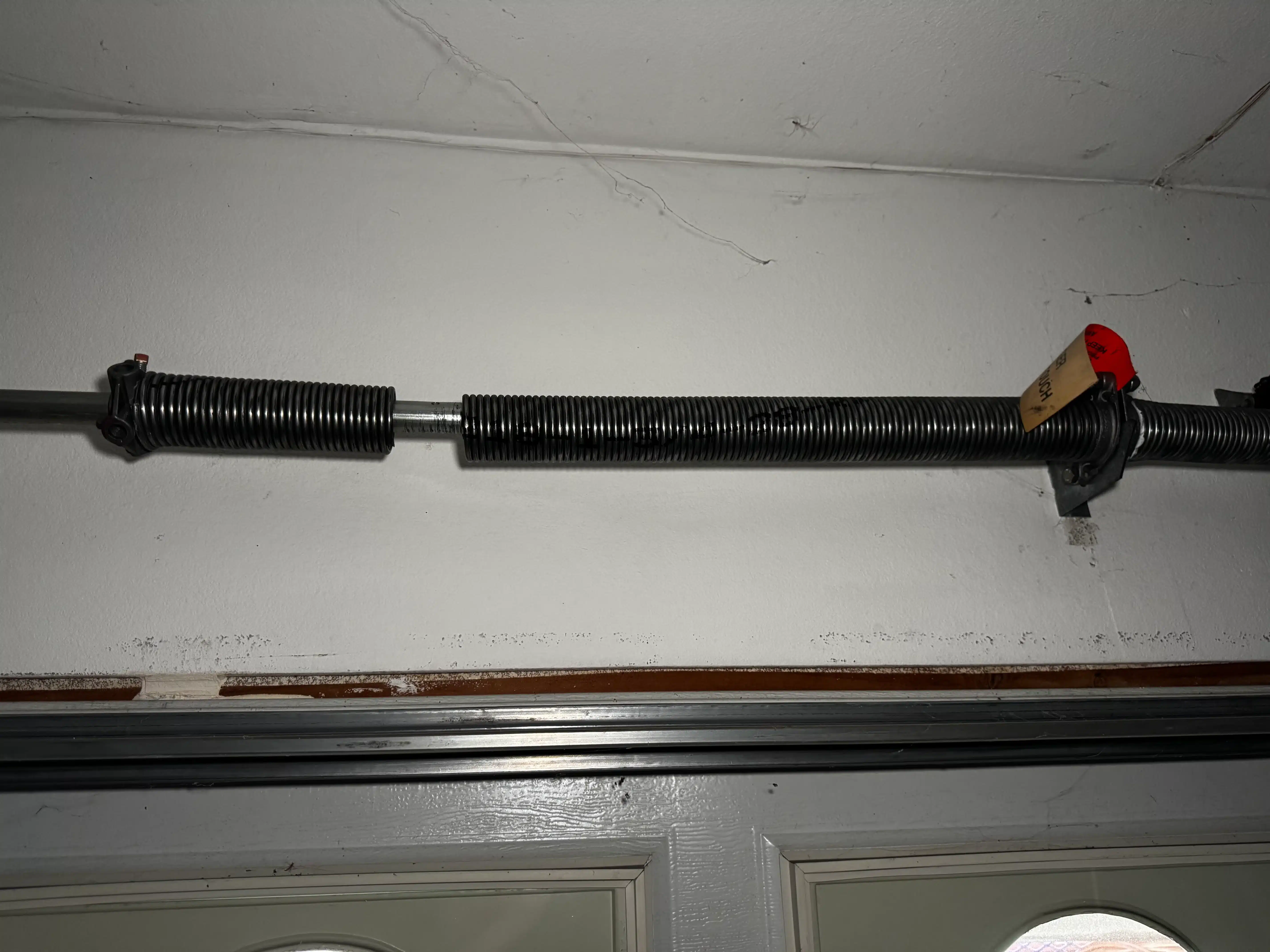
A broken garage door spring looks like:
- Coils with a visible gap or split in the middle where the metal has fully separated
- The loose spring hangs above the door instead of sitting tight and winding on the bar
- Dark staining, rust, or flaking metal scattered across the coil surface
- One spring that looks uneven or lopsided compared to the one on the opposite side
- Cables lying slack on the ground instead of running taut up to the drum
- One side of the door is noticeably lower because the spring can no longer support it
To understand what drives garage door springs to failure, read our guide on Why Is It So Expensive to Replace Garage Door Springs?, which walks through every factor behind spring failure and the need for professional replacement.
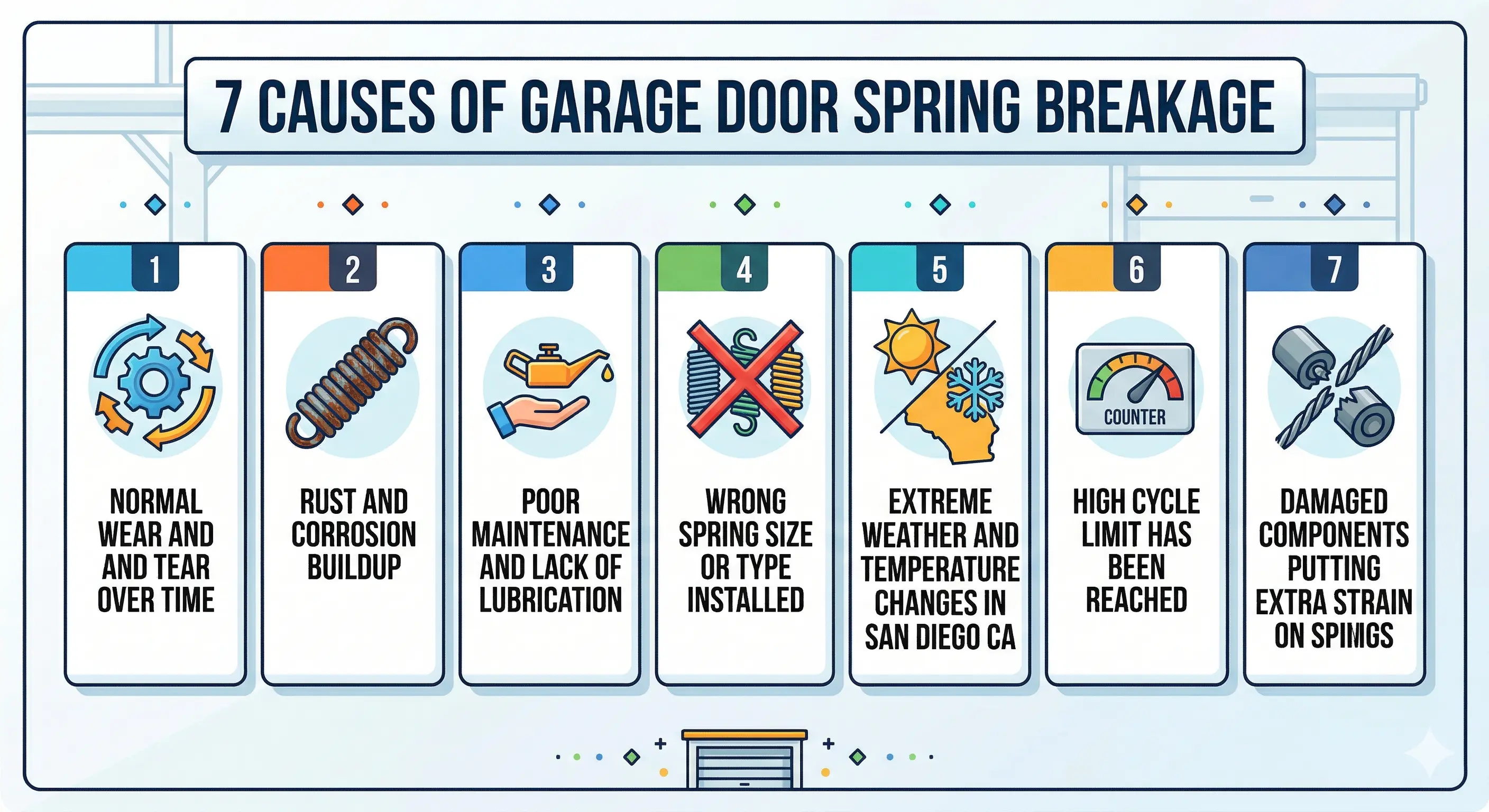
Common Causes of Garage Door Spring Failure
Normal Wear and Tear Over Time
Every garage door spring is rated for a set number of cycles, and daily use counts down that number until the spring can no longer carry the door.
Watch for these indicators:
- Cycle count has reached or exceeded the spring’s rated lifespan
- Door operation feels slower or more labored than before
- Springs produce low creaking sounds during movement, even after lubrication
- The door struggles to stay open at the halfway point without drifting
- One spring shows more visible fatigue than the other in a pair
Replacing springs at or near their cycle limit prevents the kind of sudden failure that leaves the door stuck and the entire system out of commission.
Rust and Corrosion Buildup
Rust goes beyond affecting how a spring looks because it actively breaks down the metal structure and increases friction on every cycle until the coil gives out.
Rust and corrosion show up as:
- Reddish-brown discoloration spreading across the coil surface
- Flaking or powdery metal falling from the spring during door movement
- Coils that grind instead of flexing smoothly during operation
- Visible pitting or rough texture forming along the wire
- Lubrication no longer absorbs evenly because the surface is too damaged
Catching corrosion early and keeping springs lubricated slows the breakdown before it reaches the point of no return.
Poor Maintenance and Lack of Lubrication
Friction is the enemy of garage door springs, and skipping lubrication lets that friction build up until the metal starts breaking down from the inside.
Neglected springs show these patterns:
- Squeaking or grinding sounds that grow louder over time
- Coils that look dry, dull, or powdery instead of having a slight sheen
- Visible wear lines forming along the wire surface
- Door movement becomes jerky or uneven during normal operation
- Springs heat up faster than usual due to excess friction
Regular application of lubricant every 4 to 6 months is the easiest way to extend spring life and prevent unnecessary wear throughout the system.
Wrong Spring Size or Type Installed
Installing a spring that does not match the door’s weight forces the metal to work outside its design limits on every single cycle.
Mismatched springs cause these problems:
- The door feels unusually heavy when lifted manually, even with springs in place
- One side of the door rises faster than the other during operation
- Springs wear out far ahead of their rated cycle count
- Garage door opener strains audibly to complete each open and close cycle
- Cables come off the drums repeatedly due to uneven tension distribution
Wrong sizing causes a chain reaction of damage, and proper garage door spring installation ensures the right spring is matched to the door from the start.
Extreme Weather and Temperature Changes in San Diego, CA
Steel expands in heat and contracts in cold, and repeated exposure to temperature shifts adds stress to the metal that compounds quietly over time.
Temperature-related stress appears as:
- Stiffer spring movement during cooler mornings in inland San Diego areas
- Lubricant breaks down faster in high heat and leaves coils unprotected
- Salt air, combined with temperature swings, speeds up surface corrosion
- Springs snapping during cold snaps after seeming fine the day before
- Higher spring stress in uninsulated garages from greater temperature swings
Keeping springs lubricated and inspected regularly helps prevent the wear caused by San Diego’s coastal and inland climate conditions over time.
High Cycle Limit Has Been Reached
Every spring has a maximum number of cycles built into its design, and once that limit is reached, the metal has nothing left to give.
Signs a spring has hit its cycle limit include:
- Spring was installed seven or more years ago without replacement
- The door feels noticeably harder to lift manually than it did before
- Coils look fatigued, flattened, or unevenly spaced on visual inspection
- The opener motor runs longer than usual to complete a full cycle
- Minor repairs to the spring system have become more frequent
Pushing a spring past its rated limit turns a predictable replacement into an unpredictable failure that can take the whole system down with it.
Damaged Components Putting Extra Strain on Springs
Garage door springs do not carry the load alone, and when other parts of the system fail, the springs absorb the extra stress until they give out.
Damaged components create these conditions:
- Worn rollers drag against the tracks and force springs to work harder
- Bent tracks cause the door to pull unevenly and shift the load to one spring
- Frayed cables transfer weight incorrectly and create unbalanced tension
- Faulty garage door opener pulls with uneven force and causes premature wear
- Loose hardware allows the door to shift during movement and increases the spring load
Addressing damaged components early keeps the full system balanced and prevents one failing part from pulling the springs toward early failure.
Warning Signs Your Garage Door Springs Are Starting to Fail
Garage door springs send clear signals before they fully break, and acting on those signs early prevents a costly failure.
Common warning signs include:
- A loud bang from the garage signals that a spring has snapped under tension
- Slow, jerky, or unusually heavy door movement points to springs losing strength
- One side of the door is rising faster than the other, which means tension is uneven
- Visible gaps, rust, or stretched coils confirm the metal has started breaking down
- Slack cables on the ground mean the spring can no longer support the door
To get a full breakdown of each indicator and what it means for your system, read our guide on Signs Your Garage Door Springs Are About to Fail, which covers every warning sign homeowners need to know before a complete failure occurs.
What Homeowners Can Do When They Suspect a Spring Problem
A suspected spring problem calls for immediate action, and every step thereafter should focus on limiting risk until a professional arrives.
Steps homeowners can take right away:
- Stop using the garage door immediately to avoid further damage to the system
- Disconnect the opener so the door cannot be accidentally activated
- Do a quick visual check from a distance to spot gaps, slack cables, or uneven door position
- Note any unusual sounds or changes in door movement before calling a pro
- Avoid touching the springs or any components under tension
Taking these steps right away limits the risk until a professional arrives for a proper garage door repair assessment.
What Professional Technicians Do During a Garage Door Spring Replacement
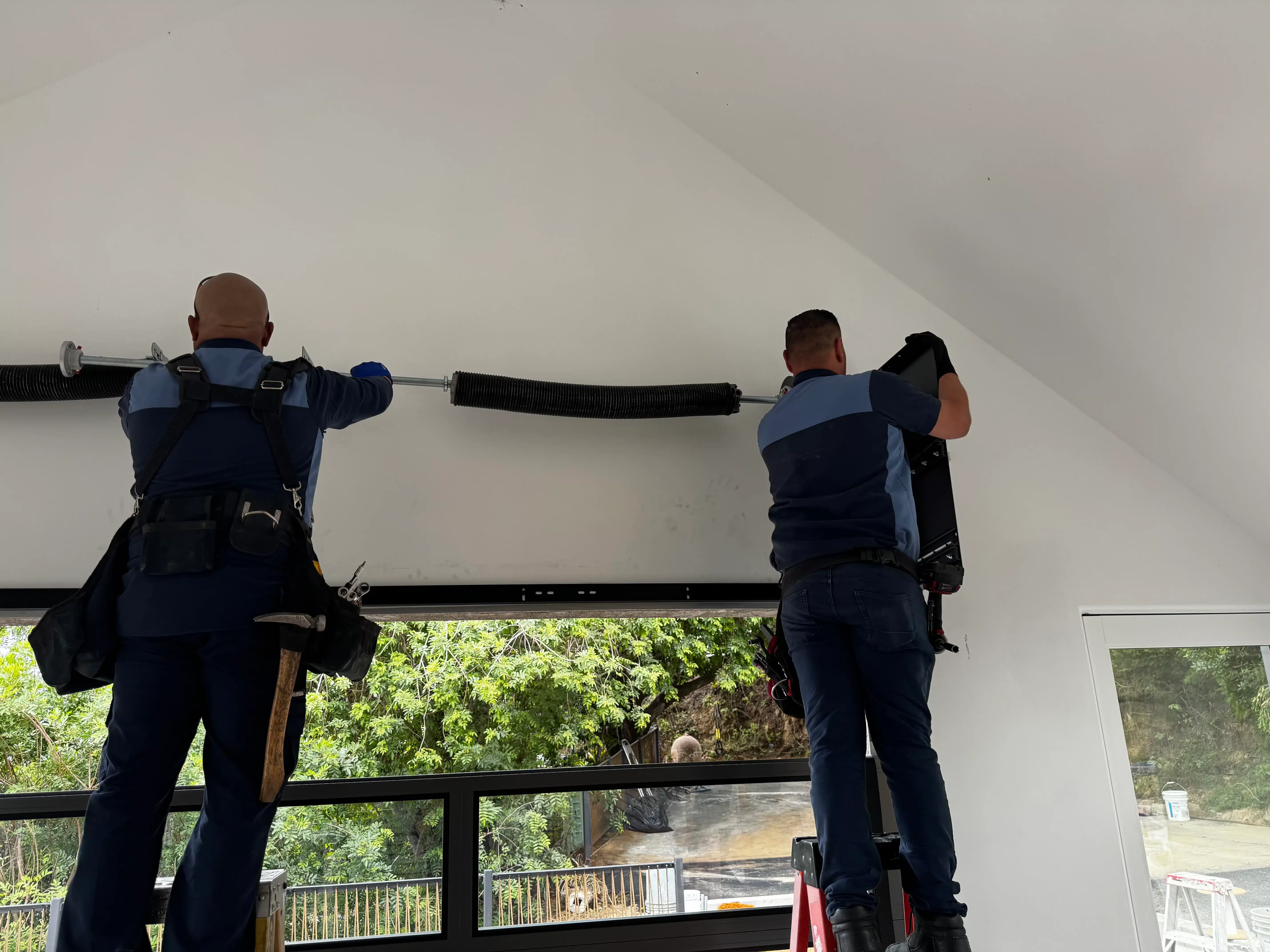
Professional technicians follow a precise step-by-step process that covers the full system, not just the spring that broke.
What professionals do during a spring replacement:
- Inspect the full spring system and surrounding components before touching anything
- Test the door balance to confirm whether one or both springs need replacing
- Release tension from the existing springs using specialized tools before removal
- Remove the damaged spring and inspect all connected hardware for wear or damage
- Install the correctly sized spring based on the door weight and cycle requirements
- Test the door manually and with the opener to confirm proper balance after installation
To follow every step of the process from inspection to final testing, read our guide on How to Replace Garage Door Springs the Right Way, which covers everything that happens during a professional spring replacement.
Simple Maintenance Habits to Make Your Garage Door Springs Last Longer
A few consistent habits go a long way in extending the lifespan of garage door springs and keeping the entire system out of the repair shop.
Maintenance habits that make a real difference:
- Lubricate springs every four to six months to reduce friction and prevent rust
- Schedule an annual professional inspection to catch wear before it becomes a failure
- Listen for unusual sounds during operation and address them early
- Test the door balance periodically by disconnecting the opener and lifting it manually
- Replace both springs at the same time to keep tension even across the system
Pairing these habits with a professional garage door maintenance visit each year keeps the entire system running at its best for as long as possible.
Act on the Causes Before Your Garage Door Springs Give Out
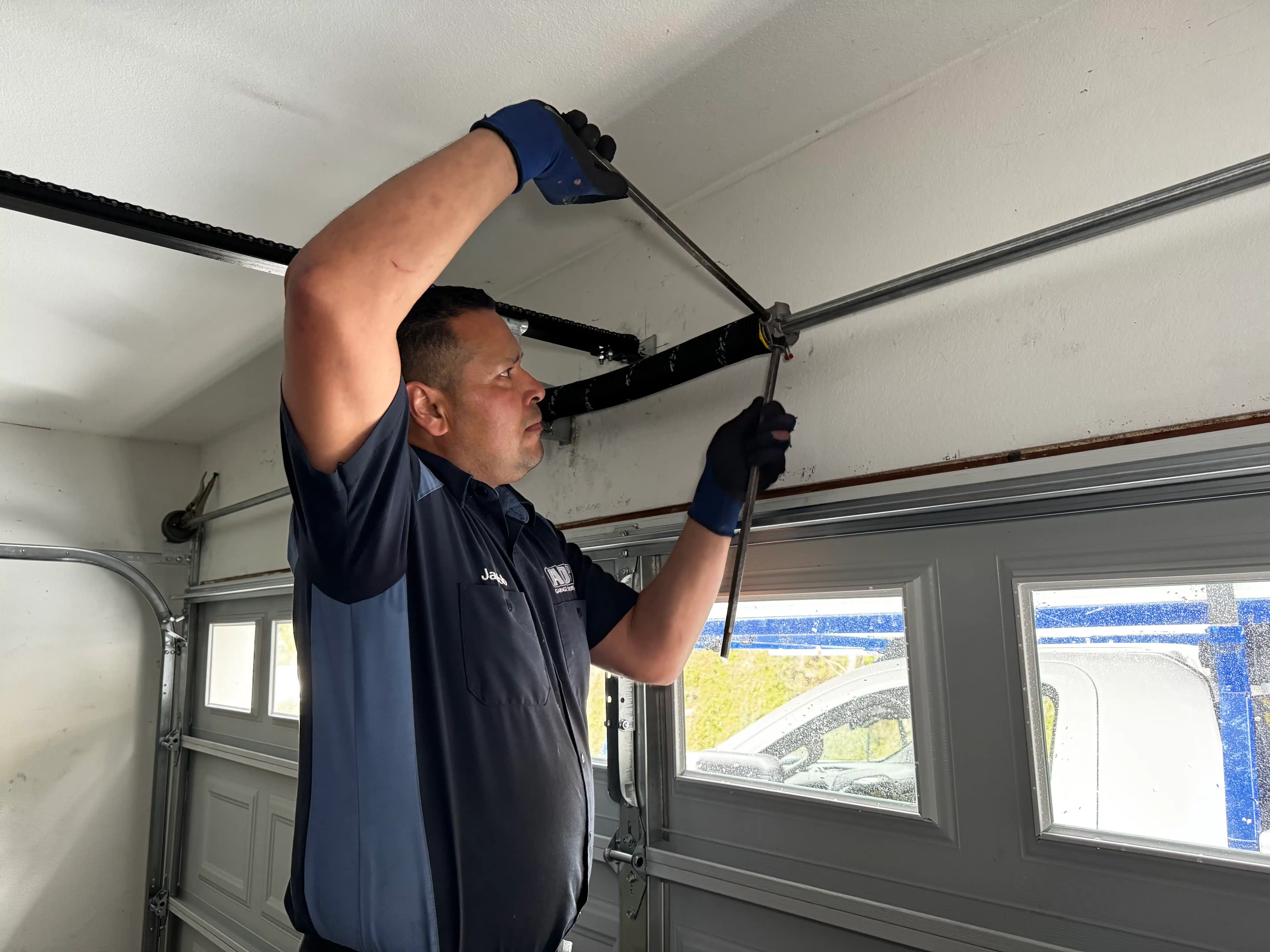
Garage door springs break for specific reasons, and knowing those reasons puts every homeowner in a much better position to catch problems before they turn into a full system failure. Understanding what causes the damage is the first step toward protecting the door, the household, and the investment.
ADS Garage Doors & Gates has helped homeowners across San Diego identify and address garage door spring problems before they escalate into costly repairs. Contact us or give us a call today and let our team inspect your springs, diagnose the issue, and get your garage door back to working the way it should.