
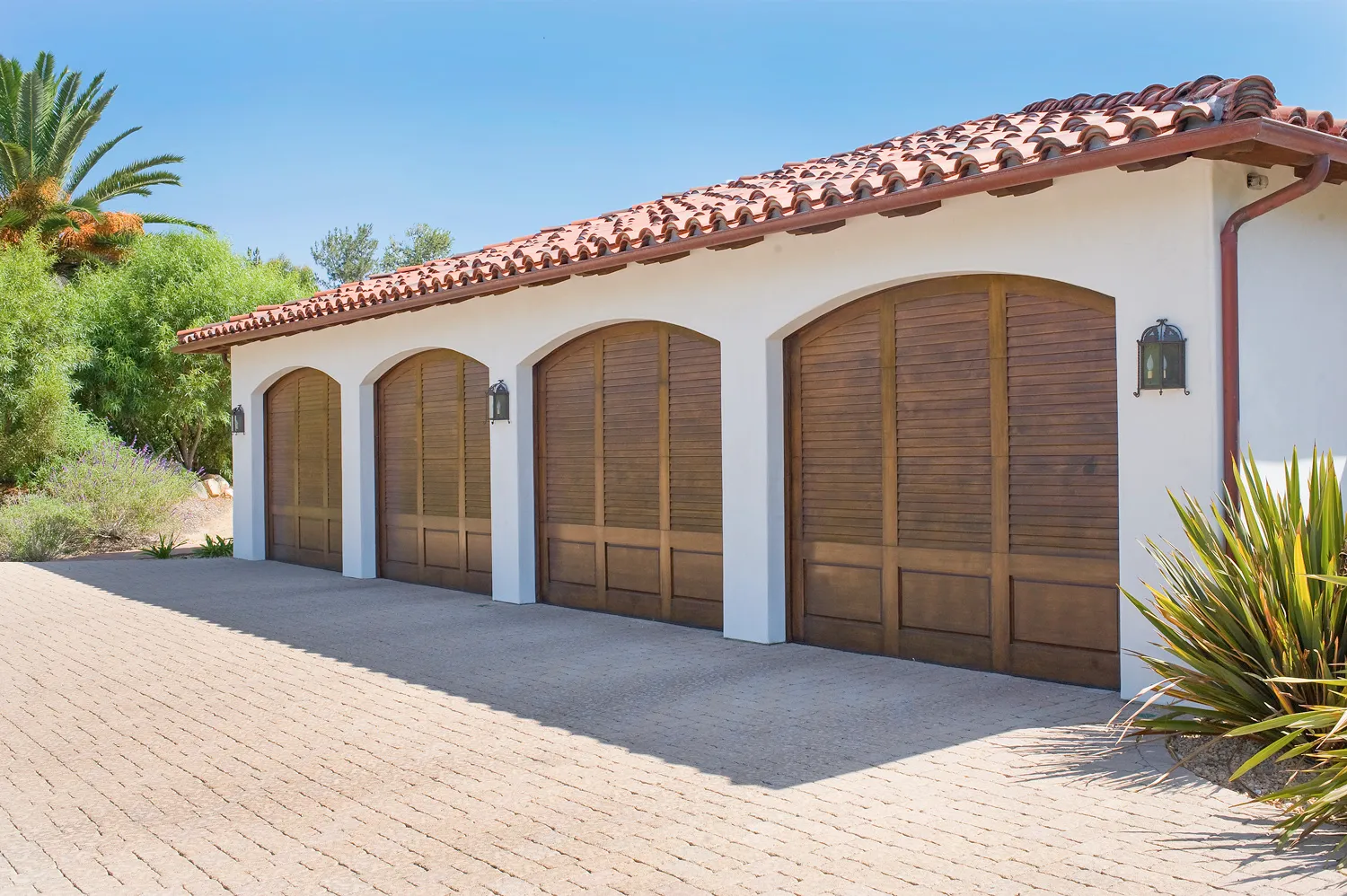
Cedar, redwood, mahogany, Douglas fir, and knotty cedar each bring distinct wood grain, durability, and cost to a custom garage door service project. Choosing the right wood species depends on climate exposure, architectural style, and how much maintenance a homeowner wants to take on.
Weighing these factors means comparing how each species actually performs in sun, rain, and daily wear over many years of ownership, not just how it looks in a showroom on day one. This guide breaks down decay resistance, weight, finish options, and typical cost across all types, giving a clearer picture before ordering.
Key Takeaways
- Cedar and redwood both offer natural resistance to moisture and insect damage without added treatment.
- Mahogany delivers a premium, dense grain suited to formal architectural styles.
- Douglas fir provides a straight, clean grain at a lower cost than premium hardwoods.
- Knotty cedar adds rustic charm through visible knots and natural variation.
- Climate exposure plays a major role in determining which species holds up best over time.
Wood Species Options for Custom Garage Doors
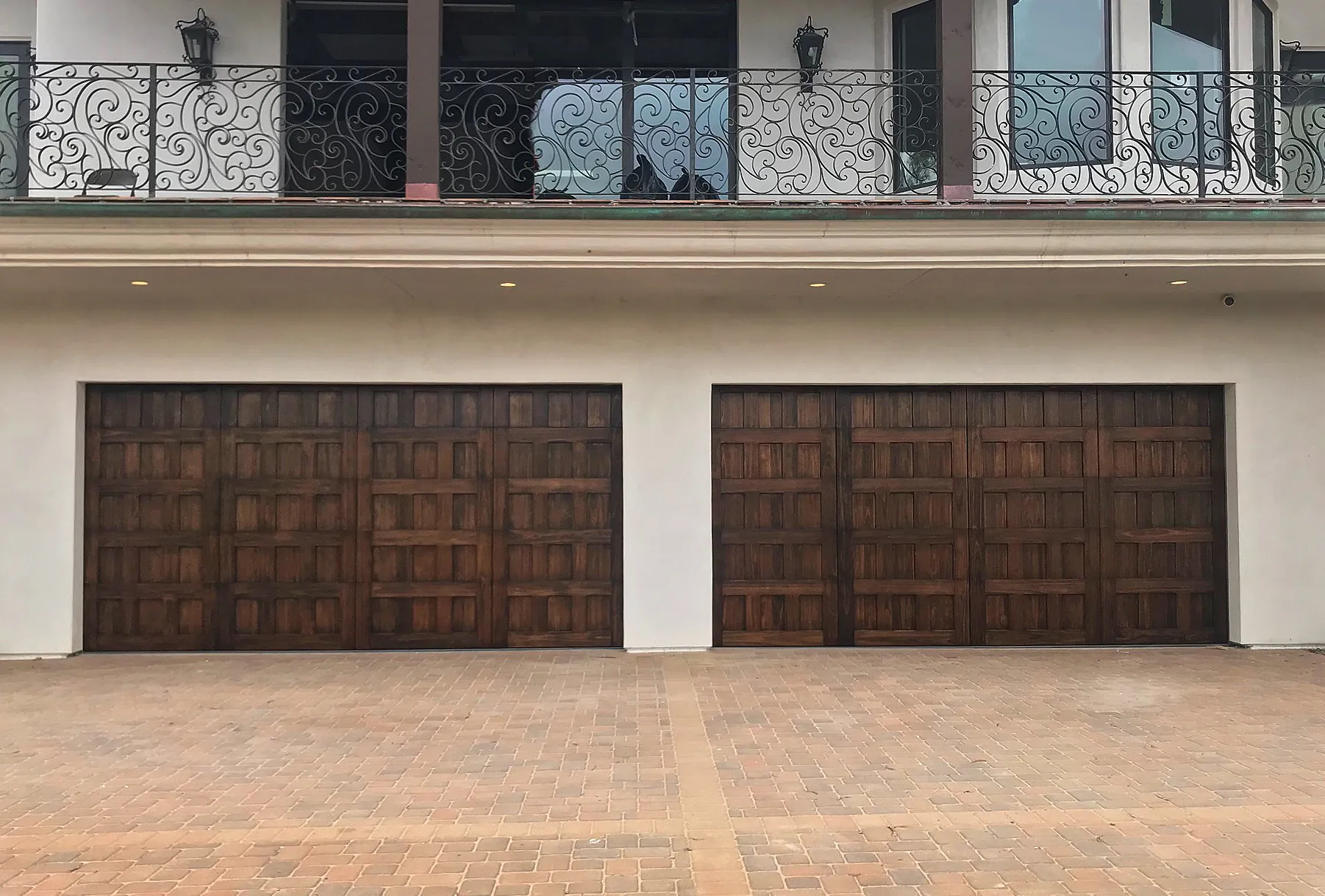
Five wood species account for the large majority of custom garage door projects, each suited to different climates and design goals.
Wood Species | Wood Grain | Best Suited For |
Cedar | Warm tone with visible knots | Coastal and humid climates |
Redwood | Rich reddish tone, stable grain | Formal or upscale architectural style |
Mahogany | Deep, dense, uniform grain | Premium projects with dry climates |
Douglas fir | Straight, clean grain | Budget-conscious custom projects |
Knotty cedar | Rustic, textured appearance | Farmhouse or rustic-style homes |
Species choice alone can shift a single door’s price from around $4,500 for composite or fir up toward $7,500 or more for premium hardwoods like mahogany.
Cedar
Western red cedar ranks among the most popular choices for custom garage doors, largely due to its natural resistance to decay and insect damage.
Cedar brings a specific combination of qualities to a custom door:
- Natural oils providing decay resistance without chemical treatment.
- A warm tone with visible knots for a more textured look.
- Lighter weight compared to premium hardwoods like mahogany.
- Strong performance in coastal or humid climate exposure.
- A finish system that takes stain evenly across the surface.
To weigh cedar against every other design and cost factor before buying, read our guide on Custom Wood Garage Doors: Design Ideas, Costs & Buying Guide, which walks through design and cost considerations in detail.
Redwood
Redwood offers dimensional stability that few other species can match, making it a reliable choice for larger door panels.
A few defining characteristics set redwood apart:
- Natural resistance to moisture penetration and warping.
- A rich reddish tone that deepens further with age.
- Straight grain suited to clean lines and formal architectural style.
- Strong performance in direct sun without significant fading.
- A smooth surface that pairs well with a solid color finish.
Redwood suits homeowners building a garage door installation meant to last decades with minimal structural movement.
Mahogany
Prized for exceptional decay resistance and a dense, uniform structure, this premium species holds up across nearly every climate.
Its reputation as a top-tier wood choice rests on a specific set of qualities:
- A rich, close-knit texture that offers excellent long-term durability.
- A deep, rich color that darkens attractively with exposure.
- Strong resistance to warping in varied climate conditions.
- Heavier weight requiring reinforced door hardware and tracks.
- A premium species suited to formal or upscale architectural style.
Garage doors built from this hardwood often become the centerpiece of a home’s exterior, adding real long-term value.
Douglas Fir
Douglas fir offers a practical option for homeowners who want real wood without the added cost of premium hardwoods.
Fir’s appeal in custom projects comes from a distinct set of advantages:
- A straight, uniform grain with minimal knots.
- Lower cost compared to mahogany or redwood.
- Solid structural strength relative to its lighter weight.
- Good compatibility with both stain and paint finishes.
- Widely available for most garage door replacement projects.
Budget-conscious buyers often choose fir for its balance of cost, structural performance, and genuine wood character.
Knotty Cedar
Knotty cedar delivers the same natural resistance as standard cedar while embracing a more rustic, textured appearance.
Knotty cedar’s visual identity sets it apart through a few defining traits:
- Visible knots creating natural variation across each panel.
- The same decay resistance found in standard western red cedar.
- Rustic charm suited to farmhouse or Spanish-style homes.
- A finish that highlights rather than hides natural imperfections.
- Lower cost than clear cedar because it includes knots.
To map out the specific upkeep knotty cedar needs to keep its rustic character intact, read our guide on How to Maintain Custom Wood Garage Doors for Long-Lasting Beauty, which walks through a full care schedule in detail.
Choosing the Right Wood Species for the Local Climate
Climate exposure plays a major role in determining which wood species holds up best over years of ownership.
Climate-driven factors help narrow the decision in a few consistent ways:
- Coastal or humid areas favor cedar or redwood for natural resistance.
- Dry, sunny climates suit mahogany’s strong resistance to warping.
- Budget-conscious projects in mild climates work well with Douglas fir.
- Homes wanting rustic charm benefit from knotty cedar regardless of climate.
- Garage door maintenance needs increase in extreme heat or coastal exposure.
Homeowners who match wood species to local climate conditions tend to see far fewer maintenance issues over time.
Wood Species Selection Comes Down to Climate and Style
Cedar, redwood, mahogany, Douglas fir, and knotty cedar each serve a different combination of budget, climate, and architectural style. Choosing the right species from the start prevents many maintenance and durability issues that can show up later with a mismatched choice.
ADS Garage Doors & Gates matches San Diego homeowners with the wood species best suited to local climate, architectural style, and long-term goals. Contact us or give us a call today to discuss which species fits a specific project best, from budget-friendly fir to premium mahogany.