
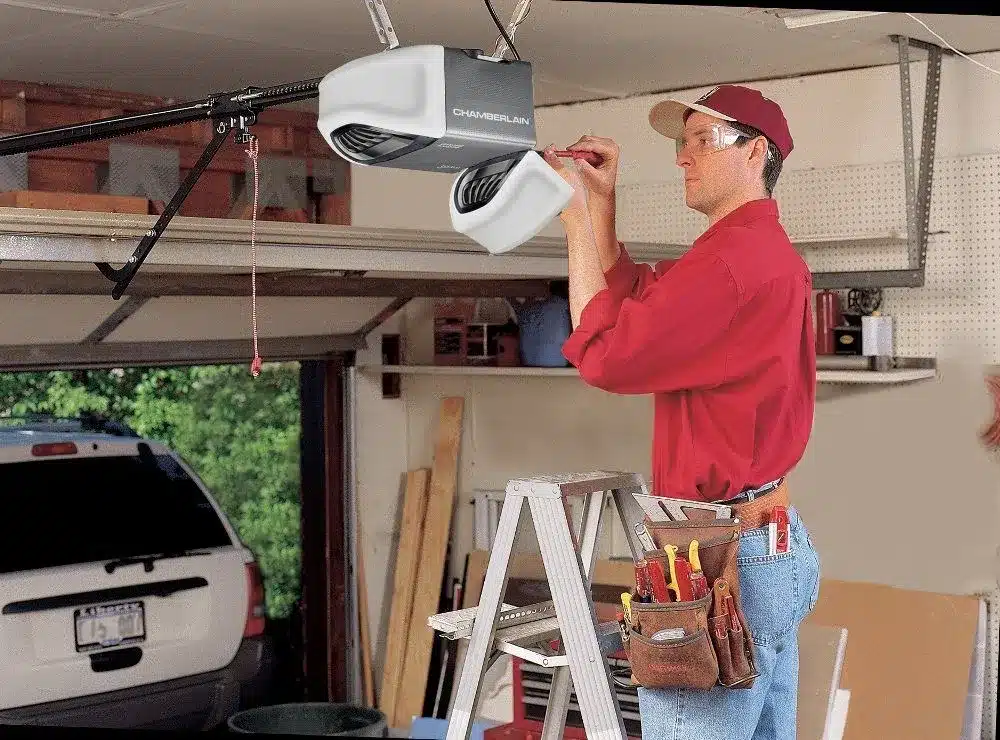
A garage door opener is a system where every part carries a specific load, and the moment one component weakens, the rest of the system works harder to compensate. That added strain is exactly what leads to a garage door repair that could have been avoided with earlier attention to the parts.
The condition of each part inside the opener directly determines how smooth, consistent, and long-lasting the system’s performance will be. Homeowners who understand this connection are far better positioned to catch problems early and make smarter decisions about repairs and replacements.
What Is a Garage Door Opener and How Does It Work?
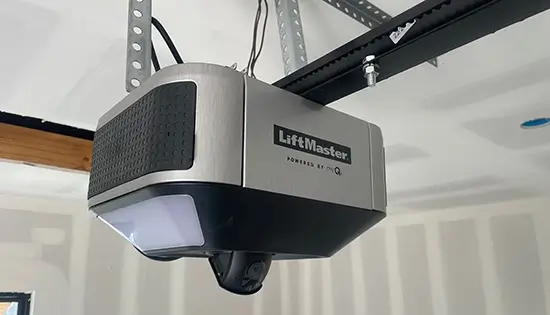
A garage door opener is a motorized device that automates the opening and closing of your garage door through a combination of mechanical and electronic components that work together as a single system.
Key components that make this possible include:
- The motor unit generates the power needed to move the door up and down.
- The drive system transfers that power along the rail to pull or push the door.
- The trolley carriage physically connects the opener arm to the door panel.
- Safety sensors detect obstructions and stop the door from closing on people or objects.
- The logic board controls every electronic function the opener performs.
To understand how these components break down in real situations, read our guide on What Are Common Garage Door Opener Problems?, which covers the most frequent issues homeowners in San Diego encounter with their opener systems.
What Are the Parts of a Garage Door Opener and How Do They Affect Performance?
Every garage door opener is built from several interconnected parts that each carry a direct role in how well the system runs and how long it lasts.
Part | What It Does | How It Affects Performance |
Motor Unit | Powers the entire opener | Low horsepower causes overheating and slow movement |
Drive System | Moves the door along the rail | Belt drives are quieter, chain drives are louder but more durable |
Trolley Carriage | Connects the opener arm to the door | Worn trolley causes jerky or incomplete movement |
Detects objects in the door’s path | Misalignment causes the door to reverse unexpectedly | |
Logic Board | Controls all electronic functions | Faulty board causes a complete malfunction |
Gears | Transfers power from the motor to the drive | Stripped gears make the motor run, but the door won’t move |
Battery Backup | Powers the opener during outages | Without it, the door won’t operate when the power goes out |
When any of these parts wear out, it directly increases the need for garage door opener repair and affects the system’s overall performance.
Common Garage Door Opener Problems San Diego Homeowners Face
San Diego homeowners face a specific set of garage door opener problems that stem from everyday use, coastal humidity, and deferred maintenance.
Common problems that show up most often include:
- Loose or worn drive chains slap against the rail, creating loud banging sounds.
- Misaligned safety sensors cause the door to reverse right after it starts closing.
- Stripped gears keep the motor running while the door stays completely still.
- Faulty logic boards trigger erratic behavior, like the door moving without input.
- A battery backup that has reached the end of its lifespan causes the door to stop working completely during a power outage, which is a code compliance issue in California.
Early identification determines whether a single garage door opener replacement part solves the problem or the full system needs an overhaul.
How Garage Door Opener Parts Influence Repairs
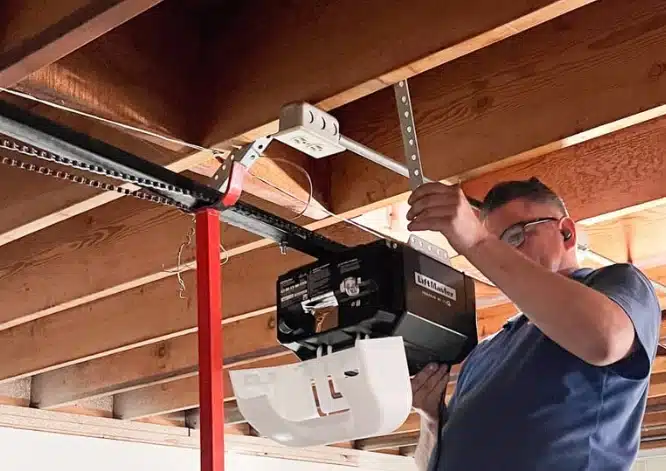
The condition of individual garage door opener parts directly determines how many components a technician needs to address during a single service call.
Part | How It Influences Repairs |
Motor Unit | An underpowered or overworked motor burns out faster and triggers a full unit replacement |
Drive System | Lack of lubrication on the chain or belt increases friction and forces the motor to work harder |
Trolley Carriage | Worn carriages create resistance that gradually damages the opener arm and drive system |
Safety Sensors | Misaligned sensors trigger repeated reversal cycles that put unnecessary strain on the motor |
Logic Board | A damaged board affects every connected component and often requires a full system diagnostic |
Gears | Stripped gears are one of the most common causes of failure under excess load |
Battery Backup | A failed battery backup forces manual operation, which puts added stress on the disconnect mechanism |
Overlooking even one part can lead to a growing list of garage door opener repair parts needing replacement all at once.
When to Repair or Replace Your Garage Door Opener Parts
Knowing whether to repair a single part or replace the entire unit helps San Diego homeowners avoid overspending on the wrong solution.
Situation | What to Do | Why |
Opener is under 7 years old | Repair | Most components still have usable life left |
Single part has failed | Repair | Replacing one part restores full function at a lower cost |
Motor runs, but the door won’t move | Repair | Usually a stripped gear or worn trolley is easy to replace |
Opener is 10 to 15 years old | Replace | Age increases the likelihood of multiple parts failing soon after |
Multiple parts failing at once | Replace | Repairing several components at once often costs more than a new unit |
Replacement parts no longer available | Replace | Discontinued models make garage door opener replacement parts hard to source |
Repair cost approaches the price of a new unit | Replace | Investing in a new opener makes more financial sense long-term |
No smart features or rolling code technology | Replace | Modern openers offer better security and smartphone connectivity |
Opener lacks battery backup capability | Replace | California law requires all newly installed garage door openers to include battery backup as standard |
To make this decision with full confidence, read our guide on When to Repair or Replace Garage Door Opener Parts, which walks through every scenario a homeowner needs to weigh before committing to either option.
How to Maintain Your Garage Door Opener for Long-Term Performance
Consistent garage door maintenance is the most practical way to protect every part of your opener and extend the life of the entire system.
Key maintenance tasks every homeowner should follow include:
- Properly lubricate the drive chain or belt, rollers, and hinges every six months.
- Test safety sensors monthly by placing an object under the door to confirm the reversal works.
- Inspect the trolley carriage and opener arm for cracks or looseness every few months.
- Tighten all bolts and fasteners twice a year to prevent track misalignment.
- Test the battery backup monthly by unplugging the opener and confirming the door still operates.
To get a full step-by-step plan for keeping every component in top condition, read our guide on How to Maintain Garage Door Opener Parts, which covers every maintenance task worth adding to your routine.
Don’t Let Worn Garage Door Opener Parts Cost You More in Repairs
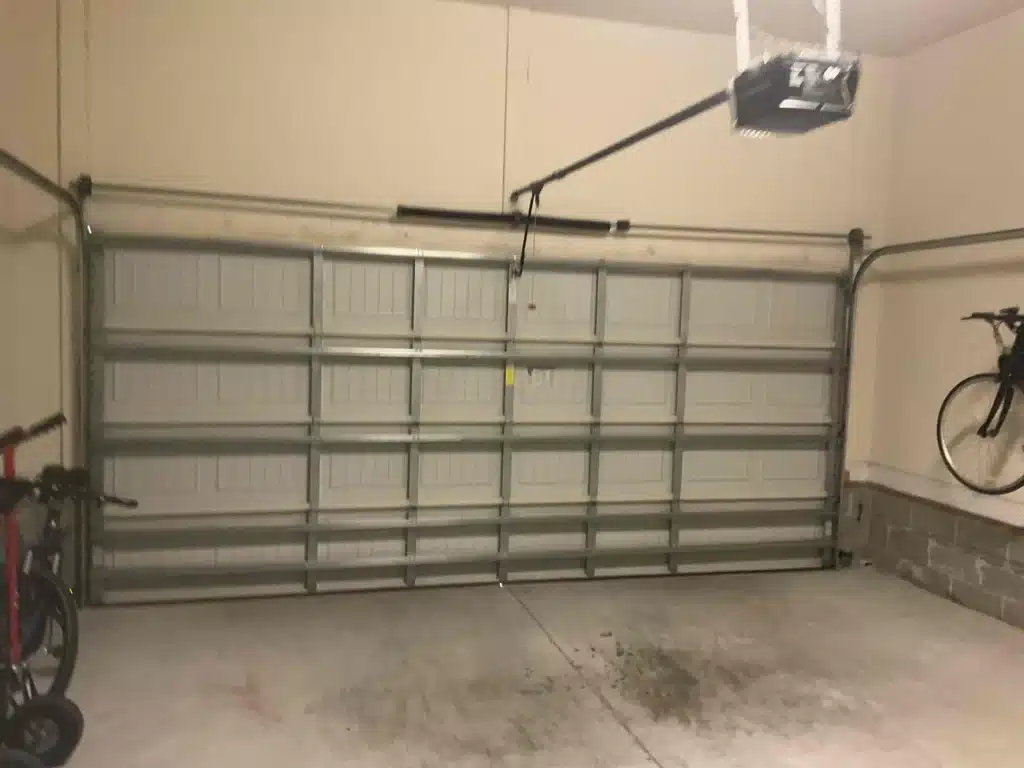
Every garage door opener is built from individual parts that directly affect how the system performs and how often it needs professional attention. Understanding what each component does gives homeowners the knowledge to make an informed decision before performance issues develop into larger repair needs.
ADS Garage Doors & Gates is the trusted garage door service team San Diego homeowners rely on for honest inspections, accurate diagnostics, and complete opener repairs. Contact us or give us a call today, and let our team assess what your garage door opener parts need to perform at their best.