
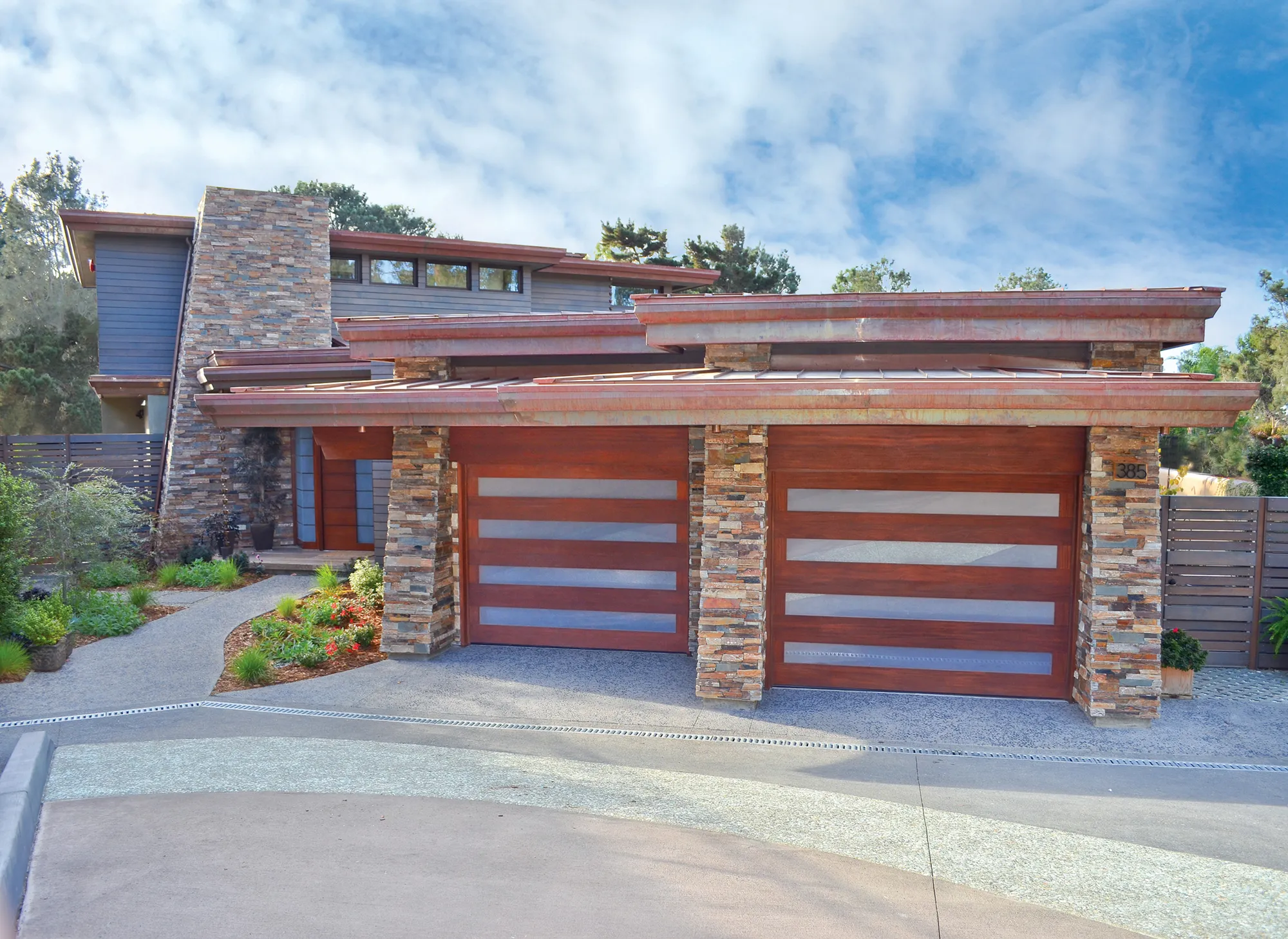
Custom wood garage door prices vary widely based on wood species, door size, design complexity, and hardware, and the total cost depends on how these factors combine. Understanding each variable makes it much easier to plan a realistic budget before requesting a quote.
Custom fabrication and heavier materials both push garage door service pricing higher for wood doors than for standard steel or aluminum options. This guide breaks down every major cost factor, from wood species to hidden installation costs, so nothing comes as a surprise later.
Key Takeaways
- Wood species has the biggest impact on price, ranging from paint-grade composite to premium hardwoods.
- Door size and configuration scale cost significantly, especially for double garage doors or custom heights.
- Design complexity, insulation, and glass upgrades all add to the door’s base price.
- Hidden costs like labor, disposal, and permit fees often get overlooked during initial budgeting.
- Ongoing maintenance adds a recurring cost that steel or composite garage doors do not require.
Custom Wood Garage Door Cost at a Glance
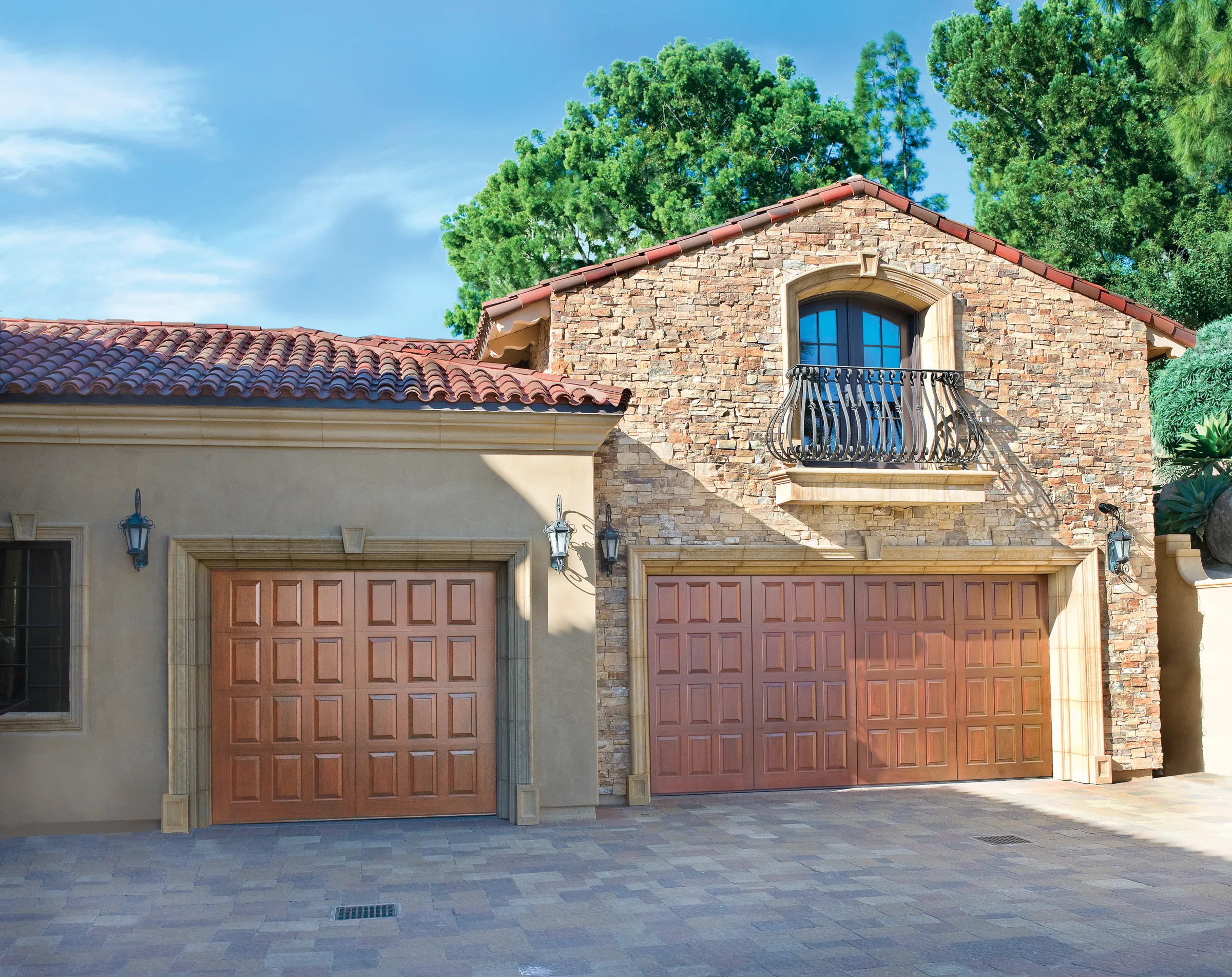
Pricing for a custom wood garage door depends on several interacting categories, starting around $4,500 for a single door and $7,500 for a double.
Cost Category | What It Typically Includes | Why It Matters for Budgeting |
Wood species | Composite, cedar, hemlock, or premium hardwoods like mahogany | Sets the baseline material cost before any customization |
Door size and configuration | Single, double, custom height, or nonstandard dimensions | Determines how much raw material and reinforcement is needed |
Design complexity | Flush panels, carriage house detailing, custom fabrication | Adds labor hours tied directly to craftsmanship |
Insulation and hardware | Layer construction, tracks, springs, decorative accents | Affects both performance and long-term durability |
Hidden and ongoing costs | Installation, disposal, permits, recurring upkeep | Often overlooked but adds up over the life of the door |
A homeowner who budgets for the door panel alone almost always gets surprised once labor, hardware, and long-term upkeep are added to the total.
The Main Cost Factors Behind a Custom Wood Garage Door
Wood Species and Material Grade
The type of wood chosen is the biggest pricing variable across nearly every custom project, often outweighing size or design complexity combined.
Material grade breaks down into a few general tiers:
- Paint-grade composite or MDF, using smooth overlays designed to be painted.
- Knotty cedar or hemlock, naturally rot-resistant and easy to stain.
- Premium hardwoods like mahogany, redwood, walnut, or ipe.
- Denser woods that resist warping over time.
- Lighter woods reducing overall weight and hardware strain.
Premium hardwoods cost noticeably more than paint-grade composite, largely because of durability and natural grain quality.
Door Size and Configuration
Larger openings require substantially more raw material along with additional structural reinforcement for a proper garage door installation.
Configuration affects cost in a few consistent ways:
- Single-car doors require less material than double garage doors.
- Standard double-car openings need wider structural support.
- Custom height or RV doors add to the standard baseline cost.
- Nonstandard dimensions often require fully custom fabrication.
- Larger doors generally needing heavier-duty hardware to match.
Door size interacts directly with wood species, since larger doors built in premium hardwood compound both cost factors significantly.
Design and Style Complexity
Custom fabrication means paying for specialized design hours and detailed manual carpentry work, since no two custom orders follow quite the same process.
Style complexity generally falls into a few categories:
- Flush or modern panels, offering simple horizontal or vertical styling.
- Carriage house doors, built with multi-layer overlays for an authentic look.
- True swing-out or slide-to-side doors, operating on specialized tracks.
- Detailed trim work adding labor hours beyond a standard flush design.
- Custom hardware integration that further increases fabrication time.
To understand how these same design choices shape the full buying decision, read our guide on Custom Wood Garage Doors: Design Ideas, Costs & Buying Guide, which walks through the most popular styles in detail.
Insulation and Layer Construction
Single-layer wood doors are lighter, while insulated versions bond wood cladding to a steel frame for better performance.
Layer construction affects both price and function:
- Single-layer doors provide minimal thermal protection.
- Multi-layer insulated cores improve noise reduction and energy efficiency.
- Foam-core insulation adds weight along with performance benefits.
- Insulated doors are often recommended for attached garages specifically.
- Better insulation reduces long-term energy costs.
Homes in coastal areas or extreme climates often benefit most from the added insulation layer despite the higher upfront cost.
Windows and Glass Upgrades
Solid wood top sections serve as the baseline option before adding glass to the overall door design, since most custom orders start bare.
Glass upgrades typically follow a general progression:
- Standard window inserts add natural light to the design.
- Dual-pane insulated glass further improving energy performance.
- Tinted or frosted glass offering more privacy near the street.
- Tempered glass adding safety features for high-traffic areas.
- Larger window sections increasing both material and labor cost.
Buyers who want more natural light without sacrificing security often choose tempered or frosted glass as a middle-ground option.
Heavy-Duty Hardware and Tracks
Solid wood doors weigh significantly more than steel doors, so they require reinforced mechanisms built to handle the extra weight.
Hardware upgrades typically include a few key components:
- Commercial-grade tracks built to handle heavier wood panels.
- High-cycle torsion springs rated for the additional weight.
- Decorative hardware like wrought-iron straps and handles.
- A new automatic opener rated for higher horsepower.
- Reinforced mounting brackets supporting the heavier overall structure.
To compare how wood species affects the hardware needed to support it, read our guide on Best Wood Species for Custom Garage Doors: Cedar, Redwood, Mahogany & More, which breaks down weight and durability differences in detail.
Hidden and Peripheral Costs
Properly outfitting a garage involves several related expenses beyond the price of the door panel itself, expenses that rarely show up in an initial quote.
A few categories account for most of these additional costs:
- Labor and installation, since wood doors take longer to balance and align.
- Removal of an old door, including breakdown, loading, and haul-away.
- A heavy-duty opener upgrade, since standard openers often burn out quickly.
- Framing or jamb modification to support the added structural weight.
- Local permit fees, especially in wind-prone or coastal regions.
Working with an experienced garage door replacement provider helps buyers avoid the surprise expenses that catch unprepared homeowners off guard.
Ongoing Maintenance Costs
Recurring expenses come with the territory once real wood gets chosen over steel or composite, since garage door maintenance never really stops after installation.
Routine care typically covers a few recurring categories:
- Sealing and staining to protect against sun and rain damage.
- Spring and cable inspections to confirm mechanical safety over time.
- Hardware checks to catch rust or loosening before it worsens.
- Touch-up staining in high-exposure areas facing direct sunlight.
- Periodic professional inspections for larger structural concerns.
To map out exactly how often each of these maintenance tasks needs attention, read our guide on How to Maintain Custom Wood Garage Doors for Long-Lasting Beauty, which walks through a full care schedule in detail.
How to Budget for a Custom Wood Garage Door
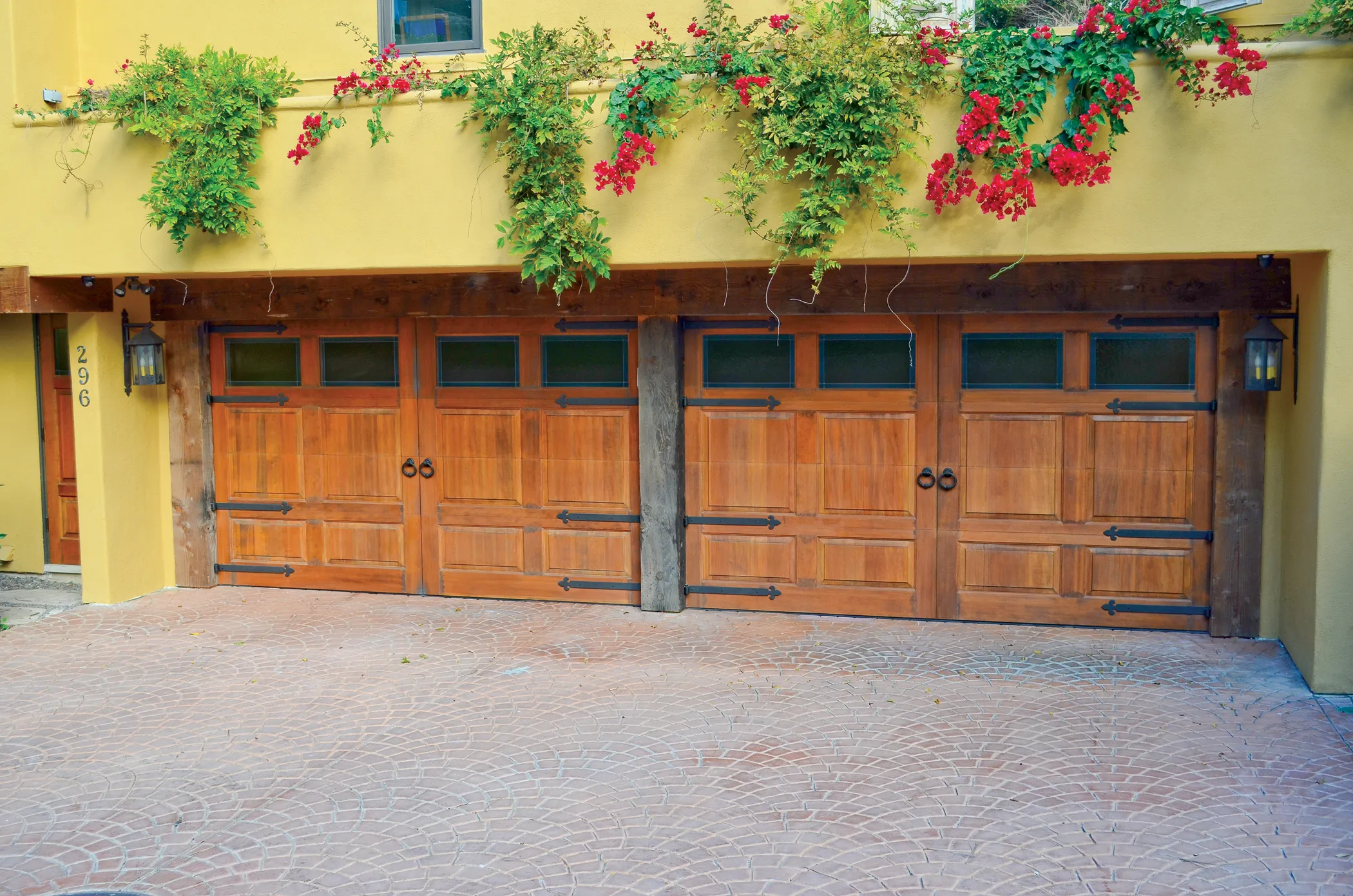
Budgeting accurately starts with treating wood species, size, and design as the three biggest cost drivers before adding anything else.
A realistic budget generally accounts for a few key categories:
- A baseline estimate built around wood species and door size.
- Design complexity added on top of the baseline material cost.
- Hardware, insulation, and glass upgrades layered in as needed.
- Installation, disposal, and permit fees included from the start.
- A maintenance reserve set aside for ongoing upkeep in future years.
Buyers who plan for every category upfront tend to avoid the budget surprises that come from focusing on the door alone.
Small Factors Combine Into One Final Price
Wood species, size, design, hardware, and long-term maintenance all combine to shape what a custom wood garage door ultimately costs a homeowner. Planning around each factor individually, instead of guessing at a single number, leads to a far more accurate budget.
ADS Garage Doors & Gates walks San Diego homeowners through every cost factor before they commit to a custom wood garage door project, from initial material choice through final installation. Contact us or give us a call today for a detailed, itemized quote built around your specific home, budget, and style.